Irving – Who tells you that you are an Aging Icon?
Irving had lived a full and interesting life. Years earlier, he worked in the stock market, back when orders were typed by hand and before computers changed everything. When technology took over, Irving decided it was time to move on, so he took a job at John Jay College, where he eventually became known among students for his knowledge of stocks.
Students sought him out for investment advice, and Irving enjoyed sharing what he knew. He eventually retired with a pension, worked for a while selling watches at Macy’s, and then settled into retirement in his Manhattan apartment. He had never married, lived simply, and enjoyed walking around the city, visiting his favorite restaurants, getting haircuts in Chinatown, eating Italian food in Little Italy, and talking to people along the way. All in all, things were good, but as is often the case, aging has a way of changing things.
Irving developed macular degeneration, which made getting around increasingly difficult, and after his brother died and with his parents already gone, he stopped traveling. His world became smaller, and when our worlds get smaller, other things can begin to change, too.
Irving became more isolated. His memory started to decline, and everyday tasks became harder. He needed help getting to medical appointments, shopping, cooking, and managing his home. Fortunately, a social worker in his building noticed, and that observation ultimately led to Iris, the elder law attorney I work with, and then to me.
One of the first things we do when taking on a new client is understanding their financial situation. We need to know what resources are available so we can determine what type of care and support is possible.
Irving had done something very well over the years. He had invested wisely and built a substantial portfolio. Along with his pension, he had enough money to pay for the services he needed but having money doesn’t automatically mean you’re protected.
We discovered that Irving’s cleaning woman wasn’t doing much cleaning and was frequently asking him for additional money to send to her family or to take care of extra services that somehow never were completed. Irving believed her stories and gave it to her, and we had to put an end to that situation. We also found a refrigerator filled with spoiled food. Meals on Wheels had been delivering food, but Irving didn’t like it, so instead of eating it, he stored it.
There were health issues, too. For years, Irving had been seeing his ophthalmologist for his macular degeneration, but he didn’t have a regular primary care physician. When he began complaining about heaviness and tightness in his chest, I helped him find one. He was referred to a cardiologist and eventually diagnosed with a damaged heart valve. Not long afterward, he suffered a heart attack.
Each new development told us Irving needed more support, and sometimes that support comes from unexpected places. A young woman in Irving’s building had befriended him. They shared a love of cats, and she began checking on him, talking with him and helping him. After a fall sent Irving to the hospital, she took care of his cat and eventually became an even more important part of his daily life.
She walked with him and took him shopping. She cooked healthy meals he actually enjoyed. She even brought him to church with her, and even though Irving was Jewish, he enjoyed being at around people and walking through the different parts of town it took to get there. This is an example that an aide isn’t the only way to have someone looking out for you. A great way is to have someone you already have a relationship with and just formalize the relationship, so that it’s a won for both parties.
We also brought in others who contributed to creating a full life, and not just one of being watched over. A daily money manager came for the mail and discussed the latest investment strategies, a volunteer close to Irving’s age visited for conversation, a Professional Organizer got rid of years of clutter and displayed items that belonged to Irving’s parents, so he could enjoy showing off things from his travels.
For a while, he flourished. He lost weight, was walking again and eating better. Most importantly, he had the companionship that was so important to him. Unfortunately, companionship wasn’t enough, and Irving’s memory continued to decline. He repeated himself and forgot when he had eaten. Food prepared to last several days might disappear in one day. We brought in overnight aides, but it became clear that remaining at home was no longer the safest option.
With that being the case Irving moved into assisted living, and he liked it. He had people around him, activities to participate in, three meals a day and help with the things he could no longer safely manage himself. He thrived there for several years before eventually passing away from the natural causes of advanced age. Irving’s story is a reminder that aging well isn’t necessarily about staying in your home at all costs. It’s about having the right support at the right time.
Key Takeaways
Pay attention when someone’s world starts getting smaller. Isolation, vision problems, mobility issues and memory changes can make even familiar routines difficult.
Having financial resources isn’t enough. Someone still needs to make sure those resources are being used appropriately and that an older adult isn’t being taken advantage of.
Socialization matters. Irving improved when he had someone walking with him, cooking with him, and simply spending time with him. Since he was able to make friends easily, assisted living was a good choice.
Health care needs coordination. Seeing one specialist isn’t the same as having someone looking at your overall health.
And perhaps the biggest takeaway is aging isn’t static. What works today may not work six months or a year from now. The goal isn’t to create one plan and assume you’re done. It’s to keep paying attention, keep reassessing and make changes when they’re needed.
The right care isn’t about taking away someone’s independence, it’s about helping them live as safely, comfortably, and fully as possible.
Meet Augusta and How We Worked Together
When I first met Augusta, I knew almost immediately that there was more to her story than what I was seeing.
She had fallen months earlier and was back home in the Manhattan apartment where she had lived for nearly 40 years. It was a fourth-floor walk-up with no elevator. Her apartment was cluttered, she appeared to be sleeping on an old couch, and she was having difficulty managing some parts of daily life.
But I’ve learned something important from doing this work and that’s to never make assumptions based on what you see when you first walk through the door.
Augusta was an educated, accomplished woman who had built a successful career in television. She loved New York City, the arts, museums, Lincoln Center, and the park near her apartment. She had saved carefully throughout her working years and was financially secure.
She was also very clear that she wanted to remain independent and did not want her niece and brother-in-law making decisions for her.
I had been brought in as Augusta’s private patient advocate after an attorney became concerned about her situation. Her niece had been given power of attorney after Augusta was hospitalized, something Augusta had not fully understood at the time. Now the niece was pushing her to leave Manhattan and move to a nursing home in New Jersey. Augusta was having none of it, and I can still hear her saying, “I would rather be dead than move to New Jersey.” That line always gets a laugh when I tell the story, especially to New Yorkers. But what was happening to Augusta was serious.
I started doing what I do with every client. I listened, asked questions, reviewed paperwork, went to medical appointments and I spoke with her doctors. Most importantly, I made sure Augusta was included in conversations about Augusta.
That sounds obvious, but unfortunately, it isn’t always what happens.
At one of her chemotherapy appointments, I learned there was a pill Augusta could take instead of traveling for chemotherapy treatments. Augusta knew nothing about it. Her niece had been told about the option but had decided Augusta couldn’t manage the medication. No one had asked Augusta, and once she knew about the option, she was interested.
Then there was the epilepsy diagnosis. Something about it didn’t make sense to me, so I kept asking questions. When I spoke with Augusta’s neurologist, I learned she had experienced an epileptic episode, but she did not have epilepsy.
Then the neurologist asked me a question I wasn’t expecting. Was Augusta being followed for her Multiple Sclerosis?
No one had mentioned MS to me.
That led us to an MS specialist and another part of Augusta’s medical history began to make sense. Symptoms that had been misunderstood or overlooked started to come together.
This is one of the reasons patient advocacy is so important. You can have excellent doctors and excellent medical care and still have gaps. Information doesn’t always travel from one doctor to another or from a family member to the patient.
Sometimes someone needs to keep asking questions, but Augusta’s medical care was only part of the picture.
I discovered she was living primarily on one grilled cheese sandwich and a cup of coffee each day. She was alone much of the week and had become almost trapped in an apartment she loved because getting up and down four flights of stairs had become so difficult.
I started thinking about what independence really meant for Augusta. Was it staying in the same apartment simply because she had lived there for 40 years or could independence mean having a safe place nearby where she could eat well, meet people, participate in activities, and still enjoy the New York life she loved?
We found an assisted living community in her neighborhood. I showed Augusta videos of the apartment, and she said yes.
We moved her piano because it mattered to her and created a pretty space that felt like Augusta. Before long, she was eating better and thriving, but there was another problem.
I discovered that Augusta’s niece and brother-in-law had been using her money without permission. Later, Augusta’s assisted living bills went unpaid, and an anonymous complaint was made claiming she was being forced to live there against her will.
Fortunately, I document everything, and I had records showing that Augusta understood her choices and was making her own decisions. Her doctors confirmed that she was lucid and competent. A longtime friend came forward to support her and eventually took over as power of attorney.
At that point, my job was done.
Augusta had her independence. Her money was protected, and she had people around her whom she trusted. Most importantly, she was living the life she chose.
That is what patient advocacy means to me.
I’m not there to take over someone’s life or tell them what they should do. I’m there to listen, ask questions, find information, connect the dots, and make sure my client has a voice in the decisions that affect their life.
Takeaways From Augusta’s Story
• Listen to the person in front of you. Family members, doctors and others may have opinions, but the client’s voice matters.
• When something doesn’t make sense, keep asking questions. One question can uncover information that changes everything.
• Look at the whole person. Health care, finances, housing, nutrition, relationships, and quality of life are all connected.
• Don’t assume independence means staying put. Sometimes changing where or how you live gives you more independence.
• Document everything. When decisions are questioned later, good documentation can be critical.
• Build a team. Doctors, attorneys, aides, organizers, friends, and advocates each bring something different to the table.
• Give people information, not orders. My job is to help clients understand their choices so they can make decisions for themselves.When I first met Augusta, I knew almost immediately that there was more to her story than what I was seeing.
She had fallen months earlier and was back home in the Manhattan apartment where she had lived for nearly 40 years. It was a fourth-floor walk-up with no elevator. Her apartment was cluttered, she appeared to be sleeping on an old couch, and she was having difficulty managing some parts of daily life.
But I’ve learned something important from doing this work and that’s to never make assumptions based on what you see when you first walk through the door.
Augusta was an educated, accomplished woman who had built a successful career in television. She loved New York City, the arts, museums, Lincoln Center, and the park near her apartment. She had saved carefully throughout her working years and was financially secure.
She was also very clear that she wanted to remain independent and did not want her niece and brother-in-law making decisions for her.
I had been brought in as Augusta’s private patient advocate after an attorney became concerned about her situation. Her niece had been given power of attorney after Augusta was hospitalized, something Augusta had not fully understood at the time. Now the niece was pushing her to leave Manhattan and move to a nursing home in New Jersey. Augusta was having none of it, and I can still hear her saying, “I would rather be dead than move to New Jersey.” That line always gets a laugh when I tell the story, especially to New Yorkers. But what was happening to Augusta was serious.
I started doing what I do with every client. I listened, asked questions, reviewed paperwork, went to medical appointments and I spoke with her doctors. Most importantly, I made sure Augusta was included in conversations about Augusta.
That sounds obvious, but unfortunately, it isn’t always what happens.
At one of her chemotherapy appointments, I learned there was a pill Augusta could take instead of traveling for chemotherapy treatments. Augusta knew nothing about it. Her niece had been told about the option but had decided Augusta couldn’t manage the medication. No one had asked Augusta, and once she knew about the option, she was interested.
Then there was the epilepsy diagnosis. Something about it didn’t make sense to me, so I kept asking questions. When I spoke with Augusta’s neurologist, I learned she had experienced an epileptic episode, but she did not have epilepsy.
Then the neurologist asked me a question I wasn’t expecting. Was Augusta being followed for her Multiple Sclerosis?
No one had mentioned MS to me.
That led us to an MS specialist and another part of Augusta’s medical history began to make sense. Symptoms that had been misunderstood or overlooked started to come together.
This is one of the reasons patient advocacy is so important. You can have excellent doctors and excellent medical care and still have gaps. Information doesn’t always travel from one doctor to another or from a family member to the patient.
Sometimes someone needs to keep asking questions, but Augusta’s medical care was only part of the picture.
I discovered she was living primarily on one grilled cheese sandwich and a cup of coffee each day. She was alone much of the week and had become almost trapped in an apartment she loved because getting up and down four flights of stairs had become so difficult.
I started thinking about what independence really meant for Augusta. Was it staying in the same apartment simply because she had lived there for 40 years or could independence mean having a safe place nearby where she could eat well, meet people, participate in activities, and still enjoy the New York life she loved?
We found an assisted living community in her neighborhood. I showed Augusta videos of the apartment, and she said yes.
We moved her piano because it mattered to her and created a pretty space that felt like Augusta. Before long, she was eating better and thriving, but there was another problem.
I discovered that Augusta’s niece and brother-in-law had been using her money without permission. Later, Augusta’s assisted living bills went unpaid, and an anonymous complaint was made claiming she was being forced to live there against her will.
Fortunately, I document everything, and I had records showing that Augusta understood her choices and was making her own decisions. Her doctors confirmed that she was lucid and competent. A longtime friend came forward to support her and eventually took over as power of attorney.
At that point, my job was done.
Augusta had her independence. Her money was protected, and she had people around her whom she trusted. Most importantly, she was living the life she chose.
That is what patient advocacy means to me.
I’m not there to take over someone’s life or tell them what they should do. I’m there to listen, ask questions, find information, connect the dots, and make sure my client has a voice in the decisions that affect their life.
Takeaways From Augusta’s Story
• Listen to the person in front of you. Family members, doctors and others may have opinions, but the client’s voice matters.
• When something doesn’t make sense, keep asking questions. One question can uncover information that changes everything.
• Look at the whole person. Health care, finances, housing, nutrition, relationships, and quality of life are all connected.
• Don’t assume independence means staying put. Sometimes changing where or how you live gives you more independence.
• Document everything. When decisions are questioned later, good documentation can be critical.
• Build a team. Doctors, attorneys, aides, organizers, friends, and advocates each bring something different to the table.
• Give people information, not orders. My job is to help clients understand their choices so they can make decisions for themselves.
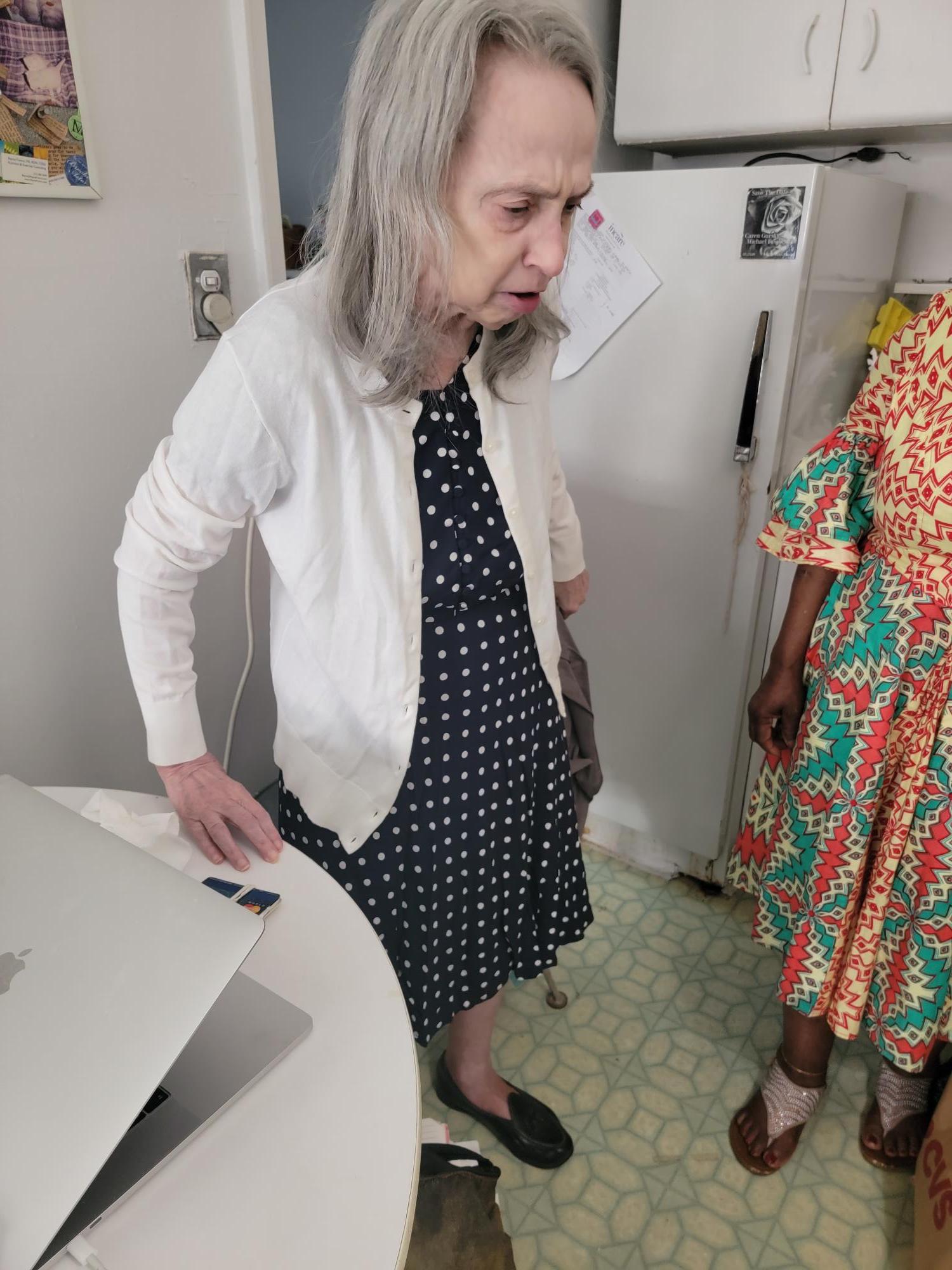
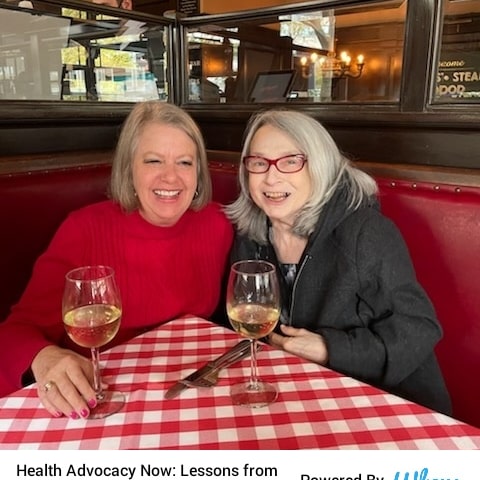
Augusta before and after (with me having a glass of wine!)
What Rose’s Story Can Teach Us About Aging, Advocacy and Being Prepared
Sometimes the most important lessons about aging come from a life that was going along perfectly well until, suddenly, it wasn’t. That was Rose’s story.
I met Rose when she was already living at The Atria, an assisted living community. She was in her 90s, remarkably healthy, independent, social, personable, and still very much engaged with the world around her.
But getting her there had been anything but simple.
For most of her adult life, Rose lived in a New York City apartment with deep family roots. It was in the building where she grew up, met her husband, and later raised her daughter, Patricia. After her husband died, Rose and Patricia became even more of a team.
They walked for miles together, went to restaurants and shops, stopped for coffee, and ended many of their outings at the cemetery where Rose’s husband was interred. They were what Rose lovingly called her “wonderful little family.”
Then everything changed in a matter of minutes.
Rose and Patricia were having lunch at TGI Fridays when Patricia suddenly walked out of the restaurant and collapsed on the sidewalk. She had suffered a ruptured aneurysm and would not recover. Rose was forced to make the devastating decision to remove her daughter from life support.
Imagine being in your 90s, losing your only child and suddenly facing the question, now what?
When a Crisis Reveals the Gaps
Rose had lived modestly and had a good amount of savings. Her accounts together with an inheritance from her daughter allowed her to live a life, if not exactly luxurious, comfortable and safe. She was physically healthy and did not need nursing home care.
What she did need was someone who understood the aging world and could look at the entire situation rather than simply “parking” her somewhere.
Family members initially became involved, but there were concerns about who should control Rose’s finances and where she should live. Fortunately, Rose’s longtime bank knew her well and protected her when others asked to be added to her accounts, by contacting Adult Protective Services, who helped with getting her into an assisted living facility.
Another relation was found, but they had not been in Rose’s life and didn’t know anything about how she wanted to live. They did care for her a lot though because she reminded them of their own mother who had recently passed. These were really good people who wanted to help, but like many younger family members, they had jobs and lived some distance away. They needed someone local who could manage the details and make sure Rose was getting what she needed.
And there were a lot of details, and that’s when I was brought in.
Rose had no government-issued identification because she had never needed to drive. She did not have her birth certificate. She had never seen it and even believed she had been born at home.
Tracking down that birth certificate became an adventure of its own. We did not know her biological father’s legal name, something that was not particularly unusual for people of Rose’s generation. We persevered and eventually we obtained the document.
In her 90s, Rose saw her birth certificate for the first time. She learned her father’s legal name, where he had been born, her parents’ ages when she was born and that she had actually been born in a hospital.
From there, we were able to get her identification and Social Security card and straighten out her Medicare and prescription drug coverage.
These may sound like administrative tasks, but they weren’t. They were the necessary building blocks that allowed Rose to maintain control over her life.
Advocacy Is About More Than Paperwork
This is an important fact I wish more families understood.
Advocating for an older adult is not something an AI can accomplish. It is learning who that person is and helping them continue to be that person for as long as possible.
Who was Rose? Rose loved to walk, so she walked. She loved beautiful clothing and had worked in a store helping women choose outfits. She enjoyed restaurants, window shopping, and Manhattan, so we did those things too.
We continued going to the Manhattan doctor she had visited with Patricia. Those appointments connected Rose to her former life and gave her an opportunity to reminisce about her daughter. It was also helpful that the doctor knew that even though Rose was in her 90s, she wasn’t suffering from the ravages of age. She heard, understood and remembered everything, from long ago and right up through her 100s.
One Christmas, we went into Manhattan to see the tree, browse stores, and have lunch. When the crowds made it impossible to get a cab, we took an outrageously expensive bicycle carriage ride to a quieter area, found some hot chocolate, and sat on a bench while waiting for our car. It was a fantastic day. Was any of that medically necessary? No. Was it important to Rose’s quality of life? Absolutely and that distinction matters.
What Rose’s Story Can Teach All of Us
Rose’s experience contains lessons that apply whether you are 45, 65, 85 or beyond.
- First, get your documents in order before you need them. Know where your birth certificate, Social Security card, insurance information, banking documents, healthcare proxy, power of attorney and other important records are located. Make sure the people who may need them know too.
- Second, think carefully about who will advocate for you. Family members may love you dearly but live far away, have demanding jobs or simply not understand the complexities of healthcare, insurance, senior living, and aging services. Sometimes professional advocacy fills the gaps that family cannot.
- Third, money alone does not protect you. Rose was financially secure, but she was still vulnerable. Having savings is important but having trustworthy people and safeguards around those savings is equally important.
- Fourth, do not automatically assume a nursing home is the answer. The right level of care should be based on what someone actually needs. Rose initially needed assisted living, not skilled nursing care. Understanding the difference allowed her to retain more independence.
Most importantly, remember that aging does not erase the person.
Rose was not simply a woman in her 90s who needed assistance. She was a mother and wife who had experienced enormous loss. She loved fashion, walking, good food, Manhattan, conversation, and beautiful things. She missed her husband and daughter terribly. She had stories to tell and places she still wanted to go.
Even planning her funeral became an expression of who she was. At 99, Rose chose her own beautiful coffin and made arrangements to eventually be laid to rest beside her husband and daughter, her “little family.”
Rose died two days after her 101st birthday. When we went to the cemetery, the beautiful coffin she had selected was waiting for her.
It was exactly as she wanted, and that may be the most important lesson Rose left behind.
Preparing for aging is not only about preparing for illness or death. It is about creating the support, safeguards and options that help you to keep living your life, your way, for as long as possible.
That is what good advocacy should always be about.
Judy’s Story: Why Planning Ahead Matters More Than You Think
Over the years, I have met many remarkable people, but Judy’s story has stayed with me for reasons that go far beyond the usual issues involving elder care, housing decisions, or estate planning. Her story is ultimately about resilience, independence, trust, and the importance of having the right people in your corner when life takes unexpected turns.
I first became involved in Judy’s life when a rehabilitation facility contacted me. They explained that she needed to transition either to long-term care, assisted living, or return home. At that point, I knew very little about her other than the fact that she was using a wheelchair. There was also a relative claiming to be willing to help, but something about the situation felt off, so I decided to meet Judy personally before any decisions were made.
When I arrived, I found a woman who appeared physically fragile but mentally sharp. Judy was anxious and immediately pleaded with me not to allow a family member access to her apartment, finances, or personal affairs. As I listened, I realized there was much more to the story. She described years of distrust involving this individual, and her concerns were later confirmed by her social worker. What became clear was that Judy understood exactly what was happening and wanted her wishes respected.
As I became more involved, I visited her apartment and quickly discovered that her fears were justified. The relative was actively searching for financial documents and evidence of ownership rather than focusing on Judy’s immediate needs. It was an important reminder that not everyone who appears willing to help has good intentions. Unfortunately, situations involving financial exploitation of older adults are more common than many people realize.
We eventually helped Judy move into an assisted living community where she could receive the support she needed while maintaining as much independence as possible. Despite her physical limitations, Judy remained capable of making her own decisions, managing her finances, and directing her future. Once she settled in, she flourished. She participated in activities, formed friendships, and enjoyed having her own apartment within the community.
As I got to know Judy better, I learned about the extraordinary life she had lived. She survived the Holocaust in Hungary, endured years of communist rule, immigrated to the United States in middle age, learned computer skills, and built a successful career working for the Department of Motor Vehicles. She never married or had children, but she built meaningful relationships and accumulated savings through decades of hard work and determination.
The more time we spent together, the more I appreciated her strength. Judy loved to sing Hungarian songs, share stories about her life, and reconnect with people and places that mattered to her. We frequently traveled back to visit her former neighborhood and friends. These outings brought her tremendous joy, but they also highlighted another reality many older adults face, specifically balancing quality of life with financial sustainability.
Eventually, Judy faced a difficult decision. She was maintaining both her assisted living residence and her apartment, which was becoming financially burdensome. Together, we explored her options. She could attempt to return home with significant support services, or she could sell her apartment and use the proceeds to help fund her future care. After much thought, Judy chose to remain in assisted living because she recognized that it provided services, social opportunities, and security she could no longer easily access on her own.
We assembled a team to prepare the apartment for sale. Plans were underway, and then the world changed. Covid had arrived.
Like so many families during those early months, we found ourselves navigating uncertainty and confusion. Judy became ill very suddenly, and within days, she was hospitalized, and shortly afterward she passed away. Her death was shocking and devastating for everyone who knew her.
What followed was an incredibly complicated estate battle. Judy had a will, but it had not been updated to reflect changes in her circumstances. Individuals who had shown little interest in her while she was alive suddenly became intensely interested in her estate. Attorneys became involved, and questions arose regarding her assets, her apartment, and her final wishes. The legal process became prolonged and difficult, made even more challenging by pandemic-related court closures and restrictions.
At the same time, we were trying to honor Judy’s deeply personal wishes regarding her burial and estate. Covid made nearly every aspect of that process harder than anyone could have imagined. Yet despite the obstacles, we remained committed to carrying out her wishes as faithfully as possible because that was the promise we had made to her.
Looking back, Judy’s story is about much more than elder care. It is about preparation, and choosing trusted advisors, and it is about having difficult conversations before a crisis occurs. Most importantly, it is about ensuring that the people entrusted with your future genuinely understand your values and will advocate for your wishes when you no longer can.
Takeaways from Judy’s story
1. Choose your decision-makers carefully.
Do not assume that a relative is automatically the best person to handle your affairs. Select people you trust completely and who have demonstrated integrity throughout your life.
2. Keep your legal documents updated.
A will that was created years ago may no longer reflect your current wishes or circumstances. Review important documents regularly.
3. Work with attorneys who specialize in elder law and estate planning.
Expert guidance can prevent confusion, conflict, and costly legal battles later.
4. Have conversations before a crisis happens.
Discuss your wishes regarding finances, healthcare, housing, and end-of-life decisions while you are healthy and able to make your preferences known.
5. Independence comes in many forms.
Accepting help does not mean giving up control. Judy maintained her independence because she continued making informed decisions about her own life.
6. Quality of life matters.
The right living environment can provide safety, community, purpose, and joy. Sometimes moving forward means letting go of a home in order to gain a better life.
Judy survived war, loss, displacement, and tremendous hardship. She built a life filled with determination, resilience, and courage. Her story reminds us that while we cannot control every circumstance life throws our way, we can prepare, plan, and surround ourselves with people who will honor our wishes when it matters most.
Elizabeth: A Caregiver in Need of Help
This chapter follows Elizabeth, whose husband’s sudden medical complications turned into a multi-year health crisis that completely reshaped her life.
What began as a procedure spiraled into infections, repeated hospitalizations, and ultimately a long-term care situation in another state. Elizabeth became his full-time advocate, traveling daily, managing doctors, and putting her own life and work on hold for three years until he passed.
But the crisis didn’t end there.
After his death, Elizabeth was left with mountains of unopened medical bills that literally filled her home. The emotional toll of caregiving had made it impossible for her to deal with the financial side.
When I stepped in, the situation revealed something surprising:
- The envelopes weren’t just bills, they were insurance checks meant to pay those bills.
- Because providers were out-of-network, insurance sent payments to Elizabeth instead of directly to doctors.
- With years of unopened mail, unpaid bills had escalated to collections, legal notices, and duplicate charges.
What followed was a long, methodical process:
- Sorting and organizing thousands of documents
- Reconstructing timelines and matching checks to bills
- Working with insurance to reissue uncashed checks
- Negotiating with providers and collection agencies
- Settling large balances for significantly less and obtaining release letters
It took a full year to resolve, but unfortunately this type of confusion is very common and in each case, it is very clear that People don’t fail the system, the system overwhelms them.
Key Takeaways
Medical crises don’t just impact health, they take over your entire life
Caregiving becomes a full-time job. Financial, emotional, and logistical responsibilities pile up fast.
Most people don’t understand how medical billing actually works
- Multiple providers = multiple bills
- Doctors bill separately from hospitals
- Out-of-network care often means you receive the money, not the provider
- Billing names may not match recognizable providers
Confusion is not a failure, it’s the norm.
Unopened bills don’t mean unpaid responsibility, they often mean overwhelm
People delay dealing with bills because they are:
- Emotionally drained
- Focused on survival and caregiving
- Intimidated by the complexity
Avoidance is often a symptom, not negligence.
Insurance doesn’t always “handle it”
Even with good coverage:
- Payments may be routed to the patient
- Deductibles and out-of-network rules complicate everything
- Long-term care situations create unexpected gaps
Everything is negotiable (more than people realize)
- Bills can be reduced
- Payment plans can be arranged
- Some balances can be forgiven entirely
- Collection actions can often be paused with communication
Choosing insurance based on price alone can be devastating
Low premiums often come with:
- High deductibles
- Limited coverage
- Significant out-of-pocket exposure
The cheapest plan can become the most expensive mistake.
There is help, but you have to ask for it
- Insurance companies can reissue payments
- Hospitals often have financial aid or hardship programs
- Advocates can step in to organize and negotiate
Documentation and organization are everything
Resolution required:
- Sorting years of records
- Matching payments to services
- Creating systems to track what’s owed
Advocacy matters deeply
Elizabeth’s presence ensured her husband received proper care. My advocacy ensured Elizabeth wasn’t financially crushed.
In this system, having someone in your corner changes everything.
10. Closure is not just financial, it’s emotional
After all the chaos was resolved, I helped Elizabeth finally place a headstone and create a moment of closure.
Sometimes the work goes far beyond money, it restores dignity and peace.
Darlene: When Help Isn’t Enough
There are some stories that stay with you, not because of how they end, but because of how hard everyone tried along the way. Darlene is one of those stories.
I was called in to help her while she was living in an upscale independent living facility. On paper, things looked stable. She had a Trust, resources, and people in place. But as is often the case, what looks good on paper and what happens in real life are very different.
The facility wanted her moved, and the trustees, who lived out of state, didn’t know how to proceed. They needed someone on the ground. That someone became me.
What struck me immediately was that Darlene and I were the same age, but our lives had been entirely different. She had been part of the 1960s Washington Square Park scene immersed in music, culture, and freedom. My life had been far more traditional.
Her story took a devastating turn when, nine months pregnant, she was pressured to bail her boyfriend out of jail. On the way, she fell down a flight of stairs. The fall caused catastrophic injuries and she lost her baby and her ability to walk. That moment changed everything.
From there came a pattern of instability and addiction. After being hit by a drunk driver while sitting on a sidewalk, she received a legal settlement that allowed her to move into a better facility. But the real issue was never where she lived, it was what she was battling inside.
Darlene refused treatment for alcoholism. She lashed out at staff and created chaos. Even with a Trust designed to protect her, she found ways to access funds and use them to buy alcohol. The very system meant to safeguard her was enabling her.
We tried everything, but nothing worked. Finally, after escalating incidents, I pushed for a medically supervised detox and rehabilitation program. After 30 days of detox and 60 days of rehab, she emerged sober and clear. A new facility agreed to take her, and we were cautiously optimistic.
Then came one of the most shocking moments of my career. As we helped Darlene settle into her new room, I assisted her with her coat and discovered it was filled with small bottles of liquor hidden in every pocket. During her ambulance transport from rehab, she had arranged a stop at a liquor store.
That was the moment the truth became undeniable. This wasn’t about access or resources. This was addiction and from there, the only viable option was a secure nursing facility. Ironically, with consistent care and therapy, Darlene regained her ability to walk. But the cycle continued, and she found ways to access alcohol again and again.
At some point, I had to face a difficult truth: I could not fix this. No amount of advocacy, or care planning could override her choices. I stepped back from billing for my services, not because I didn’t care, but because what she needed was no longer what I could provide. Eventually, the court appointed a guardian. Within a year, she convinced that guardian to move her to a less restrictive setting, and the cycle began again.
That was the last I heard.
Key Takeaways from Darlene’s Story
- You can provide every resource and still not change the outcome.
Support, money, housing, and care don’t matter if the individual cannot engage in their own well-being. - Addiction is not a logic problem.
It does not respond to incentives or second chances. Even with intervention, outcomes remain uncertain. - Systems can both help and unintentionally harm.
Darlene’s Trust was meant to protect her, yet it also enabled her. - Boundaries matter.
Knowing when you’ve done all you can is not failure—it’s wisdom. - A person is more than their behavior.
Darlene was intelligent, funny, and engaging when sober. Her story reflects trauma, loss, and circumstance. - Not every story has a neat ending.
That doesn’t make the effort any less meaningful.
If there’s one thing I’ve learned, it’s this: we can guide and advocate, but we cannot walk the path for someone else. And sometimes, the hardest part of helping is accepting that.
“You Saved My Sanity”: A Daughter’s Long-Distance Dementia Journey and the Advocate Who Changed Everything
Some stories don’t just describe what happened, they feel like what happened.
Andrea lives in Oregon. Her mother lives in New York City. Her mother is 93 now. When Andrea first met Caryn Isaacs, her mother was 88 and already showing signs of dementia.
Andrea opens with a line that says it all:
“To say that Caryn saved my sanity is an understatement.”
After reading what Andrea and her mother lived through, the years of confusion, grief, safety concerns, medical decisions, paperwork, and long-distance worry, it’s hard to imagine a more accurate statement.
Andrea isn’t just describing the help Caryn provided. She’s describing the emotional relief of finally having someone capable, experienced, and compassionate standing in the gap when a family is stretched to its breaking point.
Before Caryn: Dementia, Denial, and a Fragile Household
Before Caryn entered the picture, Andrea’s mother lived in Jackson Heights, Queens, with Andrea’s younger sister. Andrea’s mother was beginning to show signs of dementia but was in denial, something many families recognize. Dementia often arrives quietly, and at first, it’s easy to explain away.
At the time, Andrea’s sister was the primary caretaker, but the situation was complicated. Her sister had her own physical and emotional challenges, and the two had a co-dependent relationship. Her sister rarely left the house, and Andrea’s mother couldn’t do anything without worrying about leaving her sister alone.
Even then, the family was living on a fragile edge, and as dementia progressed, it became unsafe for Andrea’s mother to leave the apartment unaccompanied.
A Sudden Loss That Changed Everything
Then came the devastating curve ball. Andrea’s sister passed away unexpectedly in her early 50s. Andrea received a call from the police telling her that her sister had died suddenly at home. Later, they learned it was due to a pulmonary disease. In an instant, Andrea’s mother was left alone and with dementia in the mix, “alone” was dangerous.
Andrea describes her mother leaving the apartment, forgetting where she was going, and getting lost. More than once, the police had to bring her home. The situation was no longer manageable.
The Chaos of Legal, Financial, and Care Logistics
Andrea flew to New York City to try to stabilize everything. The family had already been working with a wonderful elder law attorney, but after Andrea’s sister died, things became far more complicated especially because many accounts and responsibilities had been in her sister’s name.
Andrea needed power of attorney transferred. She needed access to bank accounts. She needed care in place. And she needed to do all of it while living 3,000 miles away. The attorney helped her find a home health agency to send aides once Andrea returned home. At first, it seemed like the solution, but it quickly became a nightmare.
When “Care” Isn’t Really Care
Andrea describes those months with the agency as a disaster. Aides called constantly saying her mother had left the apartment and they couldn’t find her presumably because she wasn’t being supervised properly. Her mother began running out of food. The aides repeatedly asked Andrea for money to buy groceries, but Andrea suspected the food wasn’t actually going to her mother.
It was expensive and stressful and when you’re 3,000 miles away, that kind of worry doesn’t stay contained. It seeps into every part of your life.
The Oregon Move: A Loving Plan That Didn’t Work
After two months, Andrea and her husband made a decision many long-distance families eventually face and decided would move her mother to Oregon.
Andrea found a lovely, assisted living facility near their home and arranged private healthcare. She flew back to Queens, packed what she could, and brought her mother to Oregon but it didn’t go well.
Dementia and change can be a combustible combination, and Andrea’s mother did not adjust. She didn’t get along with Andrea’s husband. Andrea’s children avoided her due to erratic and sometimes mean behavior, and when shown the assisted living facility, her mother flatly refused to live there.
Andrea was emotionally spent. She couldn’t imagine taking another flight back to New York with her mother. That’s when she called the elder law attorney again, desperate, and out of options.
The Turning Point: “Call Caryn”
The attorney recommended Caryn Isaacs.
Caryn arranged to meet Andrea’s mother at JFK and bring her back to Queens. Andrea admits she was nervous about trusting someone she had never met, but due to her responsibilities in Oregon, she had no choice.
Caryn picked her mother up, took her home, bought groceries, and helped her settle in. Andrea describes Caryn as “like an angel sent to help us out.” From that moment on, Caryn became what Andrea calls a substitute “Me.
Oversight, Advocacy, and a Safer Path Forward
At first, they continued using the same agency, but Caryn visited at least once a week while the aides were there. That oversight changed everything.
Caryn also handled what long-distance families often can’t: finding doctors and dentists, scheduling appointments, arranging transportation, checking safety, and observing changes in behavior. Eventually, Andrea and Caryn moved her mother into assisted living in Queens. Andrea feared another disastrous transition, but Caryn approached it gently, keeping things calm and simple.
That was five years ago. Andrea’s mother still lives there.
Advocacy Doesn’t End Once They’re Placed
One of the most powerful lessons in this chapter is that assisted living does not replace family. It replaces some tasks but not the need for advocacy.
Caryn continued weekly visits. She ensured Andrea received weekly calls from her mother. She advocated medically, communicated with doctors, and protected Andrea’s mother from unnecessary rehab placements and risky surgery decisions. During Covid, Andrea’s mother spent over a month in the hospital. Caryn couldn’t visit, but she called regularly and stayed on top of everything.
“Go on the Vacation”
Andrea shares one moment that says everything.
She had planned a bucket-list trip to Africa for two weeks, $20,000, years in the making. As it approached, Andrea was consumed with guilt and anxiety. Caryn was compassionate, but firm.
She told Andrea to go. Not to throw away her life living trapped in “what if.” Caryn even helped arrange a pre-paid funeral package so if something happened, everything would be handled.
Andrea didn’t know that option existed, but Caryn did.
Final Takeaways
Andrea’s story is ultimately one of gratitude. Her mother is safe and stable, and Andrea can finally breathe.
As she says:
“I never question how much Caryn really cares. Otherwise, I do not know what I would do.”
That is exactly what I do as an Aging Icon. I’m not someone who simply shows up, but someone who changes the entire course of a family’s life through experience, compassion, and unwavering advocacy.
John. When Loss, Loneliness, and Identity Collide
When I first met John, he was living in a two-bedroom apartment in Manhattan, just steps from the Museum of Natural History. On paper, his life told a story of success with nearly forty years as an immigration attorney, a sharp mind, a rich professional history, and decades of friendships. But the man I met was deeply unwell, physically, emotionally, and psychologically, and living a life that had grown painfully small.
John’s decline did not begin with illness. It began with loss.
Years earlier, John’s longtime partner, Maxine, was murdered near Central Park. That singular trauma shattered his sense of safety and identity. After her death, John withdrew from life. He stopped working, began overeating, and became consumed by the belief that he was gravely ill, despite little medical evidence to support many of his fears. His world narrowed to doctors’ offices, hospital rooms, and eventually, institutions.
By the time I entered his life as an advocate, John was struggling with extreme obesity, a serious hernia, and a complex mental health profile that included borderline personality disorder. His apartment mirrored his inner state, cluttered, dirty, and neglected. Although he owned valuable items from a once-adventurous life, travel artifacts, collectibles, a coin collection, he refused to care for the space. He no longer believed the apartment, or much else, was worth investing in.
The Push and Pull of Help
John’s sister, Kathy, lived in Florida and was desperate for local support. John was lonely, but also resistant to help. He allowed a woman to live with him for companionship, even though the arrangement was deeply unhealthy. She contributed nothing financially, overtook the living space, and ultimately confined John to his bedroom, yet he could not bring himself to ask her to leave.
This pattern repeated itself everywhere: John wanted help but rejected it the moment it arrived.
We began with the basics, medical evaluations, home clean-up, and hiring aides to assist with daily living and even that proved difficult. The aides provided were poorly trained, and John’s frustration quickly turned into hostility. While his behavior could be intimidating, it was also rooted in fear, grief, and a desperate need for control.
John oscillated between cooperation and rage. He would demand help, then accuse those helping him of incompetence or mistreatment. He craved care but resisted accountability. Nowhere was this more evident than in his relationship with hospitals.
John loved hospitals.
There, he felt attended to, important, and safe. He knew how to gain admission, how to insist on tests, and how to extend his stays. Hospitals offered structure without expectation with no physical therapy demands, no participation requirements, no push toward independence. They were, in many ways, a sanctuary from loneliness.
Rehabilitation facilities, on the other hand, represented everything John resisted. Rehab required effort, movement, and engagement with a future he no longer trusted. He refused therapy, demanded early discharge, and cycled repeatedly between home, hospital, and rehab, and each cycle left him weaker and more dependent.
Despite claiming he was too ill to exercise, John could suddenly summon physical strength when it suited him, such as insisting on navigating subway stairs to go home. These contradictions were not manipulations so much as manifestations of a fractured inner life.
Assisted Living, Hope and Breakdown
Eventually, assisted living seemed like the right solution. John moved into several facilities, some upscale, others less so. Each placement came with hope, and each ended in conflict. John tested boundaries, challenged staff, and exerted control through complaints and disruptions. Over time, he was asked to leave nearly every facility in New York.
During a quarantine caused by a flu outbreak, something remarkable happened. Confined to his room, with meals provided and no pressure to participate, John stabilized. A clinical social worker worked with him during that period, and for a brief time, he cooperated and seemed calmer. But once normal routines resumed, so did his anger and resistance.
Ultimately, John exhausted every assisted living option in New York.
Florida and the Final Chapter
At John’s request, we arranged a move to Florida to be closer to his sister. This required giving up his rent-controlled apartment, a monumental decision that carried both emotional and financial weight. When the apartment was cleared, we discovered devastating losses, including valuables stolen, possessions destroyed, and his treasured coin collection gone.
Through careful legal negotiation, John received a substantial settlement for the apartment, making the move possible. In Florida, a facility agreed to take him despite his history. Kathy furnished and prepared his new space, hopeful that proximity and a fresh start might help.
But the same patterns followed.
John continued to clash with staff, refuse cooperation, and seek hospital admissions. Eventually, Kathy reached her limit. A lawyer was appointed to manage John’s finances, but without a healthcare proxy, critical medical decisions were made without full context. Against prior medical advice, John underwent hernia surgery and did not survive.
His death was tragic, and in many ways, avoidable.
Remembering the Man He Was
To understand John fully, one must also remember who he had been.
His longtime friend Stan knew that man well: the brilliant University of Pennsylvania graduate, the adventurous traveler who crossed the Sahara and climbed the Himalayas, the meticulous lawyer, the loyal friend. John was intelligent, principled, and deeply interesting. He was also demanding, particular, and often difficult but fiercely honest and capable of deep connection.
Stan stood by him for over forty years, visiting him in facilities, sharing meals, listening to complaints, and bearing witness to the slow erosion of a once-vibrant life.
Key Takeaways from John’s Story
- Unresolved grief can reshape an entire life. Without support, trauma can quietly dismantle health, identity, and relationships.
- Loneliness often masquerades as illness or anger. John’s behaviors were frequently rooted in fear of being alone.
- Mental health profoundly affects aging outcomes. Physical care alone is not enough.
- Boundaries are essential even when compassion runs deep. Help without structure can enable decline.
- Healthcare proxies matter. Advocacy saves lives.
John’s story is not one of simple failure or defiance. It is the story of a man who could not reconcile who he had been with who he had become. And it is a reminder that aging with dignity requires not only care, but courage, clarity, and connection.
Caryn Isaacs Turns 75 and She’s Giving Back
This year, instead of gifts, Caryn Isaacs is celebrating her 75th birthday by raising funds for a cause that is deeply aligned with her heart and life’s work: Pulse Center for Patient Safety Education & Advocacy (Pulse CPSEA).
Here’s how it works. It’s easy (and fun)
- Caryn has written her own song
- If you sing Caryn’s song and post it on your page, Caryn will donate $75 to Pulse
- You don’t pay a dime, your voice is the gift
- One song = one $75 donation
Find the song here:
https://carynisaacs.com/2024/02/17/aging-icon-the-song/
About Pulse CPSEA
Mission
Pulse Center for Patient Safety Education & Advocacy (Pulse CPSEA) is a nonprofit 501(c)(3) community-based organization dedicated to raising awareness about patient safety through advocacy, education, and support.
Vision
Pulse CPSEA envisions a world where the patient’s voice is heard and where no one is harmed by health care.
What better way to celebrate 75 years than by amplifying voices, spreading joy, and supporting patient safety?
June’s Story. Legacy Requires Intention and Protection!
June’s story is one I return to often, because it captures both the beauty of aging with intention and the risks that arise when important details are left unchecked. June had lived a rich, adventurous life. She was a world traveler, a lover of art and antiques, and one of the first women pilots to fly out of Floyd Bennett Field during World War II. By the time I met her, her life had slowed, but her clarity had not. She understood what she could no longer do on her own and accepted help without resistance, something many people struggle with as they age.
June found joy in simple, meaningful things, such as reading, watching television, enjoying good meals, and engaging in conversation. When an optical stroke took away her ability to read, she adapted with audiobooks. When her vision continued to deteriorate and she could no longer enjoy the life she valued, she made a deliberate and peaceful decision to stop fighting. June was not afraid of death and knew it was time. Hospice was arranged, and she passed quietly at home, on her own terms.
What followed after June’s death, however, revealed a painful and avoidable reality.
After she passed, June’s stepdaughter, who had been her power of attorney for years and responsibly managing her affairs, went to the bank to settle the estate, arrange funeral expenses, and begin closing accounts. Her intention was not personal gain. She wanted to properly wind down June’s affairs and provide a meaningful financial gift to the aide who had lovingly cared for June for years. Instead, she received devastating news. All of June’s accounts, both savings and investment accounts, had “payment on death” designations naming a former boyfriend as the beneficiary. The boyfriend was no longer involved in June’s life and had since gone on Medicaid. As a result, the funds automatically transferred to the City. Nothing could be reversed. Despite regular visits to the bank and long-standing relationships, no one had flagged the outdated beneficiary designations or suggested they be reviewed. The money was gone.
June’s story underscores a critical and often misunderstood truth: beneficiary designations supersede wills, powers of attorney, and even the best intentions. Without ongoing review, these designations can quietly undermine even the most carefully managed plans.
In the end, the stepdaughter was left to manage what she could. We arranged for June’s apartment to be carefully emptied, selling valuable antiques, artwork, and collectibles. While it was not what June would have wanted, it allowed us to cover necessary expenses and offer a small but heartfelt financial thank-you to the aide who had been such an important part of June’s final years.
Key Takeaways from June’s Story
- Aging well requires both acceptance and vigilance
- Financial oversight must be active and ongoing, not assumed
- Beneficiary designations should be reviewed whenever life circumstances change
- Institutions do not always prompt necessary updates, you must ask
- Caregivers play a vital role and deserve recognition
June aged with dignity, clarity, and courage. Her story serves as a powerful reminder that planning for aging isn’t just about how we live, but about what we leave behind, and whether our intentions are truly protected.
AGINGICON.COM

Have you lived a life of accomplishment, doing what fulfills
you? Have you reached an age where things are harder to do?
Are you a leader and you know that you cannot do it alone?
Then, you are an Aging Icon.
My name is Caryn Isaacs.
Having been at the helm of developing hundreds of healthcare
businesses and running several multi-million-dollar companies,
my journey includes pioneering a physician-owned HMO and
active engagement in Healthcare Reform.
As a Patient Advocate, my company, GetHealthHelp, LLC,
specializes in crafting solutions that enable Aging Icons to
continue pursuing their passions.
An example is a 98-year-old author, playwriter and poet who is
suffering from fibromyalgia and thought that all her work
would be forgotten. I found a way for her legacy to continue by
publishing them as books and now working on having them
made into films.
If this sounds like something of interest, let’s meet to talk
further.
-
Archives
- October 2026 (1)
- September 2026 (1)
- August 2026 (1)
- July 2026 (2)
- June 2026 (2)
- May 2026 (2)
- April 2026 (2)
- March 2026 (2)
- February 2026 (2)
- January 2026 (2)
- December 2025 (2)
- November 2025 (1)
-
Categories
-
RSS
Entries RSS
Comments RSS


You must be logged in to post a comment.