Meet Augusta and How We Worked Together
When I first met Augusta, I knew almost immediately that there was more to her story than what I was seeing.
She had fallen months earlier and was back home in the Manhattan apartment where she had lived for nearly 40 years. It was a fourth-floor walk-up with no elevator. Her apartment was cluttered, she appeared to be sleeping on an old couch, and she was having difficulty managing some parts of daily life.
But I’ve learned something important from doing this work and that’s to never make assumptions based on what you see when you first walk through the door.
Augusta was an educated, accomplished woman who had built a successful career in television. She loved New York City, the arts, museums, Lincoln Center, and the park near her apartment. She had saved carefully throughout her working years and was financially secure.
She was also very clear that she wanted to remain independent and did not want her niece and brother-in-law making decisions for her.
I had been brought in as Augusta’s private patient advocate after an attorney became concerned about her situation. Her niece had been given power of attorney after Augusta was hospitalized, something Augusta had not fully understood at the time. Now the niece was pushing her to leave Manhattan and move to a nursing home in New Jersey. Augusta was having none of it, and I can still hear her saying, “I would rather be dead than move to New Jersey.” That line always gets a laugh when I tell the story, especially to New Yorkers. But what was happening to Augusta was serious.
I started doing what I do with every client. I listened, asked questions, reviewed paperwork, went to medical appointments and I spoke with her doctors. Most importantly, I made sure Augusta was included in conversations about Augusta.
That sounds obvious, but unfortunately, it isn’t always what happens.
At one of her chemotherapy appointments, I learned there was a pill Augusta could take instead of traveling for chemotherapy treatments. Augusta knew nothing about it. Her niece had been told about the option but had decided Augusta couldn’t manage the medication. No one had asked Augusta, and once she knew about the option, she was interested.
Then there was the epilepsy diagnosis. Something about it didn’t make sense to me, so I kept asking questions. When I spoke with Augusta’s neurologist, I learned she had experienced an epileptic episode, but she did not have epilepsy.
Then the neurologist asked me a question I wasn’t expecting. Was Augusta being followed for her Multiple Sclerosis?
No one had mentioned MS to me.
That led us to an MS specialist and another part of Augusta’s medical history began to make sense. Symptoms that had been misunderstood or overlooked started to come together.
This is one of the reasons patient advocacy is so important. You can have excellent doctors and excellent medical care and still have gaps. Information doesn’t always travel from one doctor to another or from a family member to the patient.
Sometimes someone needs to keep asking questions, but Augusta’s medical care was only part of the picture.
I discovered she was living primarily on one grilled cheese sandwich and a cup of coffee each day. She was alone much of the week and had become almost trapped in an apartment she loved because getting up and down four flights of stairs had become so difficult.
I started thinking about what independence really meant for Augusta. Was it staying in the same apartment simply because she had lived there for 40 years or could independence mean having a safe place nearby where she could eat well, meet people, participate in activities, and still enjoy the New York life she loved?
We found an assisted living community in her neighborhood. I showed Augusta videos of the apartment, and she said yes.
We moved her piano because it mattered to her and created a pretty space that felt like Augusta. Before long, she was eating better and thriving, but there was another problem.
I discovered that Augusta’s niece and brother-in-law had been using her money without permission. Later, Augusta’s assisted living bills went unpaid, and an anonymous complaint was made claiming she was being forced to live there against her will.
Fortunately, I document everything, and I had records showing that Augusta understood her choices and was making her own decisions. Her doctors confirmed that she was lucid and competent. A longtime friend came forward to support her and eventually took over as power of attorney.
At that point, my job was done.
Augusta had her independence. Her money was protected, and she had people around her whom she trusted. Most importantly, she was living the life she chose.
That is what patient advocacy means to me.
I’m not there to take over someone’s life or tell them what they should do. I’m there to listen, ask questions, find information, connect the dots, and make sure my client has a voice in the decisions that affect their life.
Takeaways From Augusta’s Story
• Listen to the person in front of you. Family members, doctors and others may have opinions, but the client’s voice matters.
• When something doesn’t make sense, keep asking questions. One question can uncover information that changes everything.
• Look at the whole person. Health care, finances, housing, nutrition, relationships, and quality of life are all connected.
• Don’t assume independence means staying put. Sometimes changing where or how you live gives you more independence.
• Document everything. When decisions are questioned later, good documentation can be critical.
• Build a team. Doctors, attorneys, aides, organizers, friends, and advocates each bring something different to the table.
• Give people information, not orders. My job is to help clients understand their choices so they can make decisions for themselves.When I first met Augusta, I knew almost immediately that there was more to her story than what I was seeing.
She had fallen months earlier and was back home in the Manhattan apartment where she had lived for nearly 40 years. It was a fourth-floor walk-up with no elevator. Her apartment was cluttered, she appeared to be sleeping on an old couch, and she was having difficulty managing some parts of daily life.
But I’ve learned something important from doing this work and that’s to never make assumptions based on what you see when you first walk through the door.
Augusta was an educated, accomplished woman who had built a successful career in television. She loved New York City, the arts, museums, Lincoln Center, and the park near her apartment. She had saved carefully throughout her working years and was financially secure.
She was also very clear that she wanted to remain independent and did not want her niece and brother-in-law making decisions for her.
I had been brought in as Augusta’s private patient advocate after an attorney became concerned about her situation. Her niece had been given power of attorney after Augusta was hospitalized, something Augusta had not fully understood at the time. Now the niece was pushing her to leave Manhattan and move to a nursing home in New Jersey. Augusta was having none of it, and I can still hear her saying, “I would rather be dead than move to New Jersey.” That line always gets a laugh when I tell the story, especially to New Yorkers. But what was happening to Augusta was serious.
I started doing what I do with every client. I listened, asked questions, reviewed paperwork, went to medical appointments and I spoke with her doctors. Most importantly, I made sure Augusta was included in conversations about Augusta.
That sounds obvious, but unfortunately, it isn’t always what happens.
At one of her chemotherapy appointments, I learned there was a pill Augusta could take instead of traveling for chemotherapy treatments. Augusta knew nothing about it. Her niece had been told about the option but had decided Augusta couldn’t manage the medication. No one had asked Augusta, and once she knew about the option, she was interested.
Then there was the epilepsy diagnosis. Something about it didn’t make sense to me, so I kept asking questions. When I spoke with Augusta’s neurologist, I learned she had experienced an epileptic episode, but she did not have epilepsy.
Then the neurologist asked me a question I wasn’t expecting. Was Augusta being followed for her Multiple Sclerosis?
No one had mentioned MS to me.
That led us to an MS specialist and another part of Augusta’s medical history began to make sense. Symptoms that had been misunderstood or overlooked started to come together.
This is one of the reasons patient advocacy is so important. You can have excellent doctors and excellent medical care and still have gaps. Information doesn’t always travel from one doctor to another or from a family member to the patient.
Sometimes someone needs to keep asking questions, but Augusta’s medical care was only part of the picture.
I discovered she was living primarily on one grilled cheese sandwich and a cup of coffee each day. She was alone much of the week and had become almost trapped in an apartment she loved because getting up and down four flights of stairs had become so difficult.
I started thinking about what independence really meant for Augusta. Was it staying in the same apartment simply because she had lived there for 40 years or could independence mean having a safe place nearby where she could eat well, meet people, participate in activities, and still enjoy the New York life she loved?
We found an assisted living community in her neighborhood. I showed Augusta videos of the apartment, and she said yes.
We moved her piano because it mattered to her and created a pretty space that felt like Augusta. Before long, she was eating better and thriving, but there was another problem.
I discovered that Augusta’s niece and brother-in-law had been using her money without permission. Later, Augusta’s assisted living bills went unpaid, and an anonymous complaint was made claiming she was being forced to live there against her will.
Fortunately, I document everything, and I had records showing that Augusta understood her choices and was making her own decisions. Her doctors confirmed that she was lucid and competent. A longtime friend came forward to support her and eventually took over as power of attorney.
At that point, my job was done.
Augusta had her independence. Her money was protected, and she had people around her whom she trusted. Most importantly, she was living the life she chose.
That is what patient advocacy means to me.
I’m not there to take over someone’s life or tell them what they should do. I’m there to listen, ask questions, find information, connect the dots, and make sure my client has a voice in the decisions that affect their life.
Takeaways From Augusta’s Story
• Listen to the person in front of you. Family members, doctors and others may have opinions, but the client’s voice matters.
• When something doesn’t make sense, keep asking questions. One question can uncover information that changes everything.
• Look at the whole person. Health care, finances, housing, nutrition, relationships, and quality of life are all connected.
• Don’t assume independence means staying put. Sometimes changing where or how you live gives you more independence.
• Document everything. When decisions are questioned later, good documentation can be critical.
• Build a team. Doctors, attorneys, aides, organizers, friends, and advocates each bring something different to the table.
• Give people information, not orders. My job is to help clients understand their choices so they can make decisions for themselves.
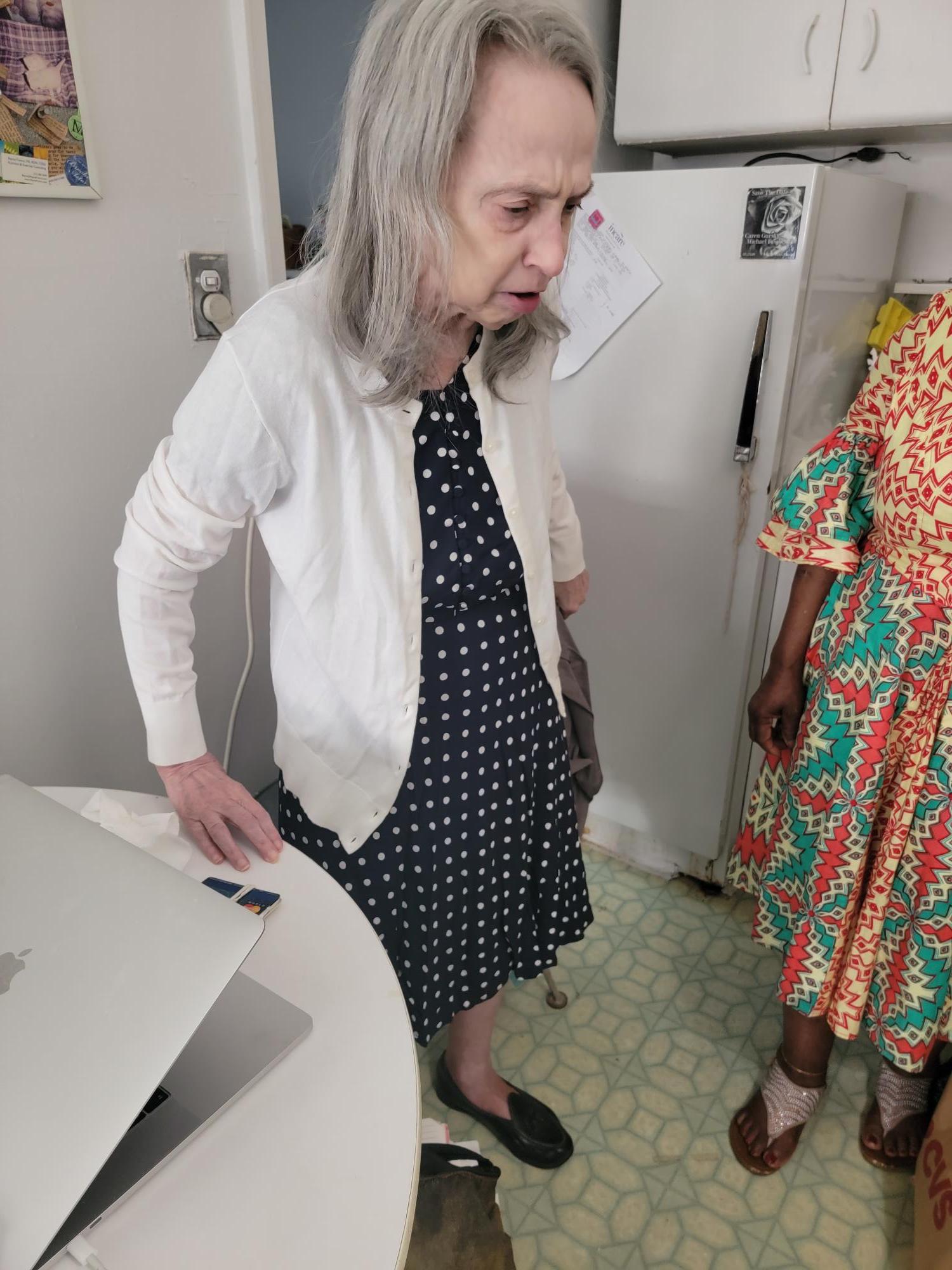
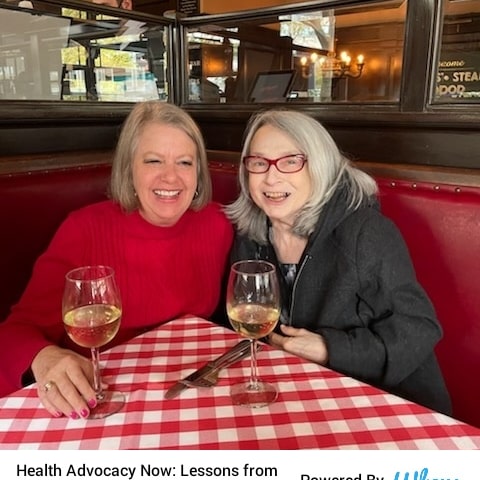
Augusta before and after (with me having a glass of wine!)
What Rose’s Story Can Teach Us About Aging, Advocacy and Being Prepared
Sometimes the most important lessons about aging come from a life that was going along perfectly well until, suddenly, it wasn’t. That was Rose’s story.
I met Rose when she was already living at The Atria, an assisted living community. She was in her 90s, remarkably healthy, independent, social, personable, and still very much engaged with the world around her.
But getting her there had been anything but simple.
For most of her adult life, Rose lived in a New York City apartment with deep family roots. It was in the building where she grew up, met her husband, and later raised her daughter, Patricia. After her husband died, Rose and Patricia became even more of a team.
They walked for miles together, went to restaurants and shops, stopped for coffee, and ended many of their outings at the cemetery where Rose’s husband was interred. They were what Rose lovingly called her “wonderful little family.”
Then everything changed in a matter of minutes.
Rose and Patricia were having lunch at TGI Fridays when Patricia suddenly walked out of the restaurant and collapsed on the sidewalk. She had suffered a ruptured aneurysm and would not recover. Rose was forced to make the devastating decision to remove her daughter from life support.
Imagine being in your 90s, losing your only child and suddenly facing the question, now what?
When a Crisis Reveals the Gaps
Rose had lived modestly and had a good amount of savings. Her accounts together with an inheritance from her daughter allowed her to live a life, if not exactly luxurious, comfortable and safe. She was physically healthy and did not need nursing home care.
What she did need was someone who understood the aging world and could look at the entire situation rather than simply “parking” her somewhere.
Family members initially became involved, but there were concerns about who should control Rose’s finances and where she should live. Fortunately, Rose’s longtime bank knew her well and protected her when others asked to be added to her accounts, by contacting Adult Protective Services, who helped with getting her into an assisted living facility.
Another relation was found, but they had not been in Rose’s life and didn’t know anything about how she wanted to live. They did care for her a lot though because she reminded them of their own mother who had recently passed. These were really good people who wanted to help, but like many younger family members, they had jobs and lived some distance away. They needed someone local who could manage the details and make sure Rose was getting what she needed.
And there were a lot of details, and that’s when I was brought in.
Rose had no government-issued identification because she had never needed to drive. She did not have her birth certificate. She had never seen it and even believed she had been born at home.
Tracking down that birth certificate became an adventure of its own. We did not know her biological father’s legal name, something that was not particularly unusual for people of Rose’s generation. We persevered and eventually we obtained the document.
In her 90s, Rose saw her birth certificate for the first time. She learned her father’s legal name, where he had been born, her parents’ ages when she was born and that she had actually been born in a hospital.
From there, we were able to get her identification and Social Security card and straighten out her Medicare and prescription drug coverage.
These may sound like administrative tasks, but they weren’t. They were the necessary building blocks that allowed Rose to maintain control over her life.
Advocacy Is About More Than Paperwork
This is an important fact I wish more families understood.
Advocating for an older adult is not something an AI can accomplish. It is learning who that person is and helping them continue to be that person for as long as possible.
Who was Rose? Rose loved to walk, so she walked. She loved beautiful clothing and had worked in a store helping women choose outfits. She enjoyed restaurants, window shopping, and Manhattan, so we did those things too.
We continued going to the Manhattan doctor she had visited with Patricia. Those appointments connected Rose to her former life and gave her an opportunity to reminisce about her daughter. It was also helpful that the doctor knew that even though Rose was in her 90s, she wasn’t suffering from the ravages of age. She heard, understood and remembered everything, from long ago and right up through her 100s.
One Christmas, we went into Manhattan to see the tree, browse stores, and have lunch. When the crowds made it impossible to get a cab, we took an outrageously expensive bicycle carriage ride to a quieter area, found some hot chocolate, and sat on a bench while waiting for our car. It was a fantastic day. Was any of that medically necessary? No. Was it important to Rose’s quality of life? Absolutely and that distinction matters.
What Rose’s Story Can Teach All of Us
Rose’s experience contains lessons that apply whether you are 45, 65, 85 or beyond.
- First, get your documents in order before you need them. Know where your birth certificate, Social Security card, insurance information, banking documents, healthcare proxy, power of attorney and other important records are located. Make sure the people who may need them know too.
- Second, think carefully about who will advocate for you. Family members may love you dearly but live far away, have demanding jobs or simply not understand the complexities of healthcare, insurance, senior living, and aging services. Sometimes professional advocacy fills the gaps that family cannot.
- Third, money alone does not protect you. Rose was financially secure, but she was still vulnerable. Having savings is important but having trustworthy people and safeguards around those savings is equally important.
- Fourth, do not automatically assume a nursing home is the answer. The right level of care should be based on what someone actually needs. Rose initially needed assisted living, not skilled nursing care. Understanding the difference allowed her to retain more independence.
Most importantly, remember that aging does not erase the person.
Rose was not simply a woman in her 90s who needed assistance. She was a mother and wife who had experienced enormous loss. She loved fashion, walking, good food, Manhattan, conversation, and beautiful things. She missed her husband and daughter terribly. She had stories to tell and places she still wanted to go.
Even planning her funeral became an expression of who she was. At 99, Rose chose her own beautiful coffin and made arrangements to eventually be laid to rest beside her husband and daughter, her “little family.”
Rose died two days after her 101st birthday. When we went to the cemetery, the beautiful coffin she had selected was waiting for her.
It was exactly as she wanted, and that may be the most important lesson Rose left behind.
Preparing for aging is not only about preparing for illness or death. It is about creating the support, safeguards and options that help you to keep living your life, your way, for as long as possible.
That is what good advocacy should always be about.
Caryn Isaacs Turns 75 and She’s Giving Back
This year, instead of gifts, Caryn Isaacs is celebrating her 75th birthday by raising funds for a cause that is deeply aligned with her heart and life’s work: Pulse Center for Patient Safety Education & Advocacy (Pulse CPSEA).
Here’s how it works. It’s easy (and fun)
- Caryn has written her own song
- If you sing Caryn’s song and post it on your page, Caryn will donate $75 to Pulse
- You don’t pay a dime, your voice is the gift
- One song = one $75 donation
Find the song here:
https://carynisaacs.com/2024/02/17/aging-icon-the-song/
About Pulse CPSEA
Mission
Pulse Center for Patient Safety Education & Advocacy (Pulse CPSEA) is a nonprofit 501(c)(3) community-based organization dedicated to raising awareness about patient safety through advocacy, education, and support.
Vision
Pulse CPSEA envisions a world where the patient’s voice is heard and where no one is harmed by health care.
What better way to celebrate 75 years than by amplifying voices, spreading joy, and supporting patient safety?
AGINGICON.COM

Have you lived a life of accomplishment, doing what fulfills
you? Have you reached an age where things are harder to do?
Are you a leader and you know that you cannot do it alone?
Then, you are an Aging Icon.
My name is Caryn Isaacs.
Having been at the helm of developing hundreds of healthcare
businesses and running several multi-million-dollar companies,
my journey includes pioneering a physician-owned HMO and
active engagement in Healthcare Reform.
As a Patient Advocate, my company, GetHealthHelp, LLC,
specializes in crafting solutions that enable Aging Icons to
continue pursuing their passions.
An example is a 98-year-old author, playwriter and poet who is
suffering from fibromyalgia and thought that all her work
would be forgotten. I found a way for her legacy to continue by
publishing them as books and now working on having them
made into films.
If this sounds like something of interest, let’s meet to talk
further.
-
Archives
- October 2026 (1)
- September 2026 (1)
- August 2026 (1)
- July 2026 (2)
- June 2026 (2)
- May 2026 (2)
- April 2026 (2)
- March 2026 (2)
- February 2026 (2)
- January 2026 (2)
- December 2025 (2)
- November 2025 (1)
-
Categories
-
RSS
Entries RSS
Comments RSS


You must be logged in to post a comment.