High Blood Pressure and Colds
I am a Bzz Agent, http://bzzagent.com. I get free samples of things to try. I’ve been a member for a long time and love all the things I get, especially makeup. When I saw this campaign for a Cold Relief medication that is specially made for people with high blood pressure, I thought I had better try it. I do worry about side effects from over the counter medications.

Just in time for cold and flu season, I received my sample of Coricidin HBP http://www.coricidinhbp.com/coricidin/home/index.jspa
I have Coupons for $3 off if anyone is interested.
Speak up now or forever hold your peace.
Governor Cuomo wants to hear your comments and suggestions. Attend this meeting and give your or your organization’s statement in regards to the future of health care.
STATE OF NEW YORK
SPECIAL PUBLIC HEALTH AND HEALTH PLANNING COUNCIL
AGENDA
January 7, 2014
10:00 a.m.
AT THE FOLLOWING LOCATIONS
• New York State Department of Health Offices, Corning Tower, 14th Floor, CR#1,
Albany, NY 12237
• New York State Department of Health Offices at 90 Church Street, 4th Floor,
Rooms 4A & 4B, NYC
• New York State Department of Health Offices at 584 Delaware Avenue, 3rd
Floor Training Video Conference Room, Buffalo, NY 14202
• New York State Department of Health Offices, Triangle Building, 335 East Main Street,
Rochester 2nd Floor, NY 14604
I. INTRODUCTION OF OBSERVERS
Dr. William Streck, Chairman
II. HEALTH PLANNING COMMITTEE REPORT
John Rugge, M.D., Chair
Recommendations for Consideration and Vote:
A. Limited Services Clinics (Retail Clinics)
B. Urgent Care
C. Freestanding Emergency Departments
D. Non-Hospital Surgery – Ambulatory Surgery Centers and Office Based Surgery
E. Upgraded Diagnostic and Treatment Centers
III. ADJOURNMENT
A Christmas Story
 This month has been festive, with lots of good wishes for the next year. All I can think of is that it is better than last year, when Sandy damage still had many of our clients and friends without. It is great to see the lights back on, both Menorah and Christmas decorations. This year, I took over as Treasurer for the Senior Umbrella Network of Nassau. It was a true pleasure meeting and talking to each member of this group of professionals. I also welcomed a new co-chair for the SUN Advocacy Committee, Rick Scher, Chiropractor and owner of Care Connection Home Care. The Committee planned and executed a Safe Driving program and chose Avoiding Senior Scams as next year’s project. Our first meeting is scheduled for January 14th, and all SUN members are invited to attend. Call me if you are interested at 347-965-9222.

Back Talk
This week I want us to stop for a moment and take stock in where we are , what we are doing and what our plans are for the rest of this coming week/year. Regardless of your religious beliefs or unbelief’s, this week the world will celebrate the Christmas holiday and that will have an effect on each of us in one way or another, whether we personally celebrate the holiday or not. Based on this simple fact, I want us each to take a long hard look at what we have planned and make sure that we do something that will help us in our businesses and in our personal lives as well. That thing that I am going to focus on for my tip this week is the word “Priority”.
Priority
This means looking at and picking the most important things to do with our own personal time, with our families, friends and ultimately with our businesses as we prepare to close out the year. To help us focus on what I mean here I want us to look back in history at a story that most of us know, or have heard something about because it relates to the Christmas story and the birth of Jesus. I am using this story because it fits so well based on the season and upcoming holiday and it has and provides great metaphors for the points I want to make for this week’s tip of the week.
We will pick up the story as it starts in Bethlehem where Mary and Joseph are traveling and she is pregnant and ready to deliver her child. Since there were many who were traveling like them to come back to where they were from and register for a census for the government, when it came time to stop for the evening they hadn’t called ahead and made reservations like we can do today at the drop of a hat on our smart phones or tablets. Instead, they just stopped where they could and tried to get a room at the inn that they came across. Here is where I think the metaphors for my points start to really show up and I want each of you to consider how this may be affecting you right now based on some decision you may have made, or are making for tomorrow’s day in the office. Here is point number one:
Unfortunately, most people are living their lives in such a tiny, insignificant way because they’ve filled their lives with meaningless activity. We continue to do the same things over and over again each and every day, sometimes without regard for why we do them, or we just do them out of convenience, instead of making sure that we are doing the “right thing” by changing and potentially creating waves. Case in point would be the the innkeeper who didn’t make room for Jesus on the first Christmas. I’m sure he was super busy with a full Inn that was already loaded to the brim. He had food to make, linens to take care of, kids probably running around all over the place and a little out of control, not to mention those who were still showing up at his door asking for space that he didn’t have. I think most of us would have reacted the same way that he did when Joseph and Mary showed up at his door at night and wanted a place to stay, but instead, he sent them out to the stable with the animals and didn’t prioritize his choice. His actions didn’t keep Jesus from being born. His actions didn’t stop God’s purpose in history. It just hurt the innkeeper. He missed the privilege of housing the Son of God at his birth. Do you think that he might have responded differently if he knew that the baby boy that was going to be born in his stable that night would change history forever? In fact, that is why they call it “HisStory”! From there on, we name time as either BC or AC and the world has never been the same from a recording stand point again. I would think that looking back he would have given up his own room had he made a different priority out of the opportunity that presented at his door that night. From a marketing stand point, don’t you think he would have liked to have said that “Jesus was born and slept here in this bed in this room” ? Do you think any of us have ever made a “busy’ or “convenient” mistake like that in our lives?
So my question for each of us this week is how can each of us not repeat a mistake like this and miss an opportunity in our lives that might have an impact on the rest of the world? As each of us gets busy with work, family and friends, will we get so caught up in everything else, that we miss a chance to share the full story of Chiropractic with a patient who might become the one who refers hundreds of other patients to our practice? Will we be so caught up in the candy and cookies that our patients bring in to us that we miss those in our community that are going without basic food to eat, let alone preparing or having any food for the holiday? Are we going to be celebrating gifts of new clothes and things to wear and enjoy while others might need a coat or socks just to keep them warm at night? I know we can’t change the whole world or the problems of the whole world, but I think if each of us focuses just a little better this week on things that can and do really matter, we can make some changes in our own communities that can change our practices and our business model forever! With that in mind, here is what I suggest you do:
Follow Albert Einstein’s principle of simplicity.
Simplicity
“If you can’t explain it to a six year old, you don’t understand it yourself.” – Albert Einstein
The more complicated you have to make something seem, the more you do not understand the inner workings of it. Think about the best teachers that you have had in your life. Did they make even the most complicated topics full of vocabulary that you did not understand, or did they make it easier to understand by simplifying? This week, keep Chiropractic as simple as you can when you share and explain it to others and watch how much easier it is for them to then refer those they know in for care. Check out our new Report of Findings video online at www.backtalksystems.com as you share the message of chiropractic with those who need the unique services that you offer.
Generosity
This week I want you to look at everything you are doing with your marketing plans and be as generous as you can be. I know that certain rules and regulations will apply based on the types of patients that you care for and the laws of your region where you practice, but maybe you can give out a gift card that offers the gift of a complimentary first visit for your patients to share with someone that they have been trying to get in to see you. You can put an expiration date on it, say within the next 2-4 weeks so they don’t delay and they go out NOW and offer a reason for someone to get in and try your services before they wait any longer and continue suffering the effects of ill health. Maybe it’s a two for one deal on a certain day that you are trying to build up. Or maybe you can offer a signed book, a customized calendar for next year, or an complimentary update exam that they may need to resume care again at your office and that cost is keeping them away. Check with your local licensing board to make sure what ever type of offer you make is legal and won’t get you into trouble, but be generous with your staff and with your patients during this holiday season and show them that you are a person who cares enough about them and those they know and care about as well. You can offer the gift of access to your services in a way that helps them start what can become a lifestyle choice for better health during this holiday season!
I wish each of you a wonderful holiday season, regardless of what or how you celebrate and I hope we get the chance to continue serving you in the coming years. If there is anything we can do to help, just give us a call toll free at 800-937-3113 or visit BackTalkSystems.com
Depending on the kindness of strangers.
Understanding the who can benefit from Obamacare.
Very good article from the times, with a response from Don McCanne, Physician for a National Health Plan.
The New York Times Magazine
October 30, 2013
The President Wants You to Get Rich on Obamacare
By Adam Davidson
(Tom) Scully was scheduled to deliver the keynote address at an event hosted by the Potomac Research Group, a Beltway firm that advises large investors on government policy (tag line: “Washington to Wall Street”).
When Scully finally began his speech, he noted that the prevailing narrative among Republicans — assuming that many in the room were, like him, Republican — was incorrect. “(Obamacare) is not a government takeover of medicine,” he told the crowd. “It’s the privatization of health care.”
Scully then segued to his main point, one he has been making in similarly handsome dining rooms across the country: No matter what investors thought about Obamacare politically — and surely many there did not think much of it — the law was going to make some people very rich.
A couple of years ago, Scully identified his best bet. NaviHealth, the company he co-founded, is designed to streamline an enormous but often overlooked corner of the health care market that, many studies conclude, is the most financially wasteful: post-acute care, or the treatment of patients (mostly seniors) after hospitalization for surgery or serious illness.
Scully has a simple way of describing what NaviHealth — and much of the Affordable Care Act — brings to medicine. “It’s called capitalism,” he told me. “Which doesn’t exist in health care, really.”
In 2001, after George W. Bush appointed Scully the administrator of what would soon be known as the Centers for Medicare and Medicaid Services, he at last began to implement his ideas. Scully focused on designing and executing Medicare Part D, which opened one corner of government-provided health care — pharmaceuticals — to market forces. This created a new role for a previously relatively obscure business, the pharmacy benefit manager, or P.B.M., which streamlined prescription-drug services. Express Scripts, a once modest Midwestern company, used economies of scale to lead the effort in shifting seniors from expensive name-brand drugs into generics. According to Fortune, it is now the 24th-largest company in America.
By the time Medicare Part D went into effect in 2006, Scully, who was by then in the private sector, put his theory to the test. He invested in a smaller P.B.M., MemberHealth, which grew, in three years, from $6 million in revenue to $1.2 billion. “It was a hockey stick,” he recalls. “It took off like a rocket.” When the A.C.A. was near passage, Scully hoped to repeat the success. Once he and his partners at Welsh, Carson realized no one else had seen the potential in post-acute care, he thought he had another MemberHealth on his hands. “That’s what I expected with NaviHealth,” he told me. “I felt the same way: we would take off like a rocket.”
On the morning that Congress finalized the deal that would reopen the government and defeat — for a few weeks, at least — the latest Republican effort to derail Obamacare, I visited Scully in his New York office. Scully then began a set speech I had heard many times about how Republicans don’t understand the new health care law, that it’s actually more, not less, capitalistic than anything that came before.
Whether all this money flowing from Washington to Wall Street will benefit the rest of us is another question. Glenn Hubbard, the pre-eminent economist who helped devise George H. W. Bush’s health plan with Scully, told me that the cost of the A.C.A. will far outpace any possible efficiencies. Dean Baker, an economist at the progressive Center for Economic and Policy Research, told me that a government-run single-payer plan would be far more beneficial.
Comment: Former CMS administrator Thomas Scully has been a major player in injecting more capitalism into health care. This article describes his mindset, including the fact that he intends to get his share of the mega-wealth that health care privatization is creating.
Look at some of the trends:
* Medicare + Choice was established to allow private insurers to compete with Medicare with the goal of eventually transforming our public Medicare program into a market of private health plans.
* When the insurers couldn’t compete, Medicare + Choice was replaced with Medicare Advantage – a scheme designed to overpay private insurers by 14% in order to give them an “advantage” in the Medicare marketplace – with the intent of eventually displacing traditional Medicare.
* The Medicare Part D drug plan was designed to use private pharmacy benefit managers – diverting a massive amount of taxpayer funds to the capitalists, while prohibiting government negotiation of fair drug prices.
* The architects of the Affordable Care Act rejected a government single-payer solution and set up exchanges of private insurance plans that would siphon off more taxpayer dollars to pay for the private sector’s wasteful administrative excesses.
* Although the widely discussed “public option” would have had little impact since it would not have changed our basic, fragmented health financing infrastructure, nevertheless, even it was rejected as allowing too much of a government role in a health insurance market that the pro-market capitalists wanted to control completely.
* As a token tossed to the public option advocates, co-ops were authorized in the Affordable Care Act. These organizations – to be managed by representatives of the patients – were poisoned by a model that saddled them with massive intolerable debt service that would make it impossible to compete with the private insurers, not to mention that they are prohibited from marketing their product to the public. Competition is fine when the private sector is given unfair advantages over government programs, but, in the minds of these capitalists, it is unfair to allow a government or even quasi-government program to compete against the private sector. The government cheats by unfairly providing greater efficiency and value. Medicare’s administrative costs are 1.4% whereas the Affordable Care Act grants private insurers 15% to 20% administrative costs including profits.
* The Affordable Care Act also gave a great boost to consumer-directed health care – a concept of expanding the role of marketplace decisions in the purchasing of health care. By establishing a low actuarial value in the benchmark plans in the insurance exchanges – the patient pays a greater percentage of health care costs out of pocket primarily through high deductibles – much needed regulatory oversight is being replaced with the flawed theory that price decisions in the marketplace will bring health care costs under control.
* Under the false theory that government austerity measures are required to stimulate a thriving market by limiting taxation, Medicare and Social Security remain under threat by those who would privatize these programs through measures such as Medicare vouchers.
We need to understand what Scully is trying to say: The law is going to make some people very rich. Is that what we what from the most expensive and most dysfunctional health care system of all wealthy nations? We have been warned.
Dean Baker got only one line in this very long article: a government-run single-payer plan would be far more beneficial. That should be our take-home message.”
___________________________________________________________________________________________________________________________________________________________________________
And this from the past, to see that this was always the plan, not just from Scully, but from all of the insurance industry.
CMS Administrator Tom Scully Announces Resignation
Thursday, December 4, 2003
CMS Administrator Tom Scully on Wednesday confirmed that he will resign Dec. 15 after President Bush has signed the Medicare bill (HR 1) into law, the AP/Boston Globe reports. Scully, who has headed CMS for the past three years, said that he will most likely take a job at one of five investment or law firms that have offered him a position as an adviser on Medicare legislation (Sherman, AP/Boston Globe, 12/4). Scully could earn as much as five times his current $134,000 annual salary in the private sector. Scully said that he decided to leave the agency in May for personal reasons, but Bush administration officials requested that he remain at CMS to work on the Medicare bill. Scully agreed and received an ethics waiver from HHS that allowed him to work on the Medicare bill and negotiate with potential new employers at the same time (California Healthline, 12/3). Scully said in an interview Wednesday, “I’m thrilled I stuck around to see it through. It’s done.” However, several opponents of the Medicare bill said that Scully’s conversations with potential employers during the bill’s negotiations “reinforced” perceptions that the Bush administration “favors insurers and drug companies over seniors,” the AP/Globe reports. David Sirota, spokesperson for the Center for American Progress, said, “Seniors have a right to know why a White House bill that forks over billions to the HMOs and drug industries was written by a person who was apparently pursuing employment with those same industries.” According to the AP/Globe, Scully said that the firms had been “courting” him for months (AP/Boston Globe, 12/4). Potential replacements for Scully include Leslie Norwalk, acting deputy administrator of CMS; Peter Urbanowicz, deputy general counsel for HHS; and William Winkenwerder, assistant secretary of health at the Department of Defense (California Healthline, 12/3).
Need Health Insurance? Check here.
Mathew Taber was kind enough to send me these screen shots of the sign in process for the federal exchange. Check it out and let me know if you saved money.
http://medicalaccessforamerica.com/obamacare-healthcare-exchanges/#comment-1473
I was not qualified for a subsidy under the NYS Exchange. http://www.healthbenefitexchange.ny.gov/
I didn’t have any trouble getting into the site, even from my phone. However, it was pretty disappointing to see the high deductibles and low coverage, especially for services I and my clients use like Chiropractic, Dentistry and Physical Therapy.
Oct. 1, 2013 Health Exchange Now Open & one more business bites the dust.
The TogetherRX web site has long been a resource for people who do not have health insurance to get access to prescription drugs at discount prices. Their web site says this about who they are:
With Together Rx Access®, individuals and families without prescription drug coverage can gain access to immediate savings on hundreds of brand-name and generic prescription products at their neighborhood pharmacies. Through this website, we also connect you with resources about the Health Insurance Marketplace, the Affordable Care Act, individual pharmaceutical company patient assistance programs, and other patient assistance resources.
Right under the promo is this notice of why you will no longer have access to this program.
IMPORTANT PROGRAM INFORMATION
Together Rx Access is ending February 28, 2014.
Together Rx Access has conducted a thorough review of our cardholders’ needs and the ability of the Program to meet these needs going forward. Based on that review, we have determined that individuals and families who need help obtaining their prescription medicines may be better served by the health coverage options available through the Health Insurance Marketplace, expanded Medicaid programs in select states, or by individual company prescription assistance programs. As a result, the Together Rx Access Program will close at the end of the year.
Eligible individuals can enroll in our prescription savings program until December 31, 2013. To help our cardholders transition to other programs, they can continue to use their Together Rx Access Card at participating pharmacies until February 28, 2014. After this day, savings will no longer be available with the Together Rx Access Card.
For more information go to http://www.togetherrxaccess.com/
Here is the link to the NYS Health Exchange, where you will find information about which health plans are available and what they cover. You will also need to use the exchange if you have previously been covered by a Healthy NY Plan. http://info.nystateofhealth.ny.gov/
These summaries show the benefits or health services that are covered by “standard” health plans offered in NY State of Health. Standard plans must have 10 Essential Health Benefits required by NY State of Health.
Summaries also show the amount you may pay (deductibles, copays) for those services. Standard plans are available at several levels: Bronze; Silver; Gold and Platinum. Certain New Yorkers may choose from these levels: Silver-Cost Sharing Reduction; Catastrophic; and American Indian/Alaskan Indian products.
Use these summaries along with the Tax Credit and Premium Estimator to get an idea of your total costs and benefits.
Life is short.
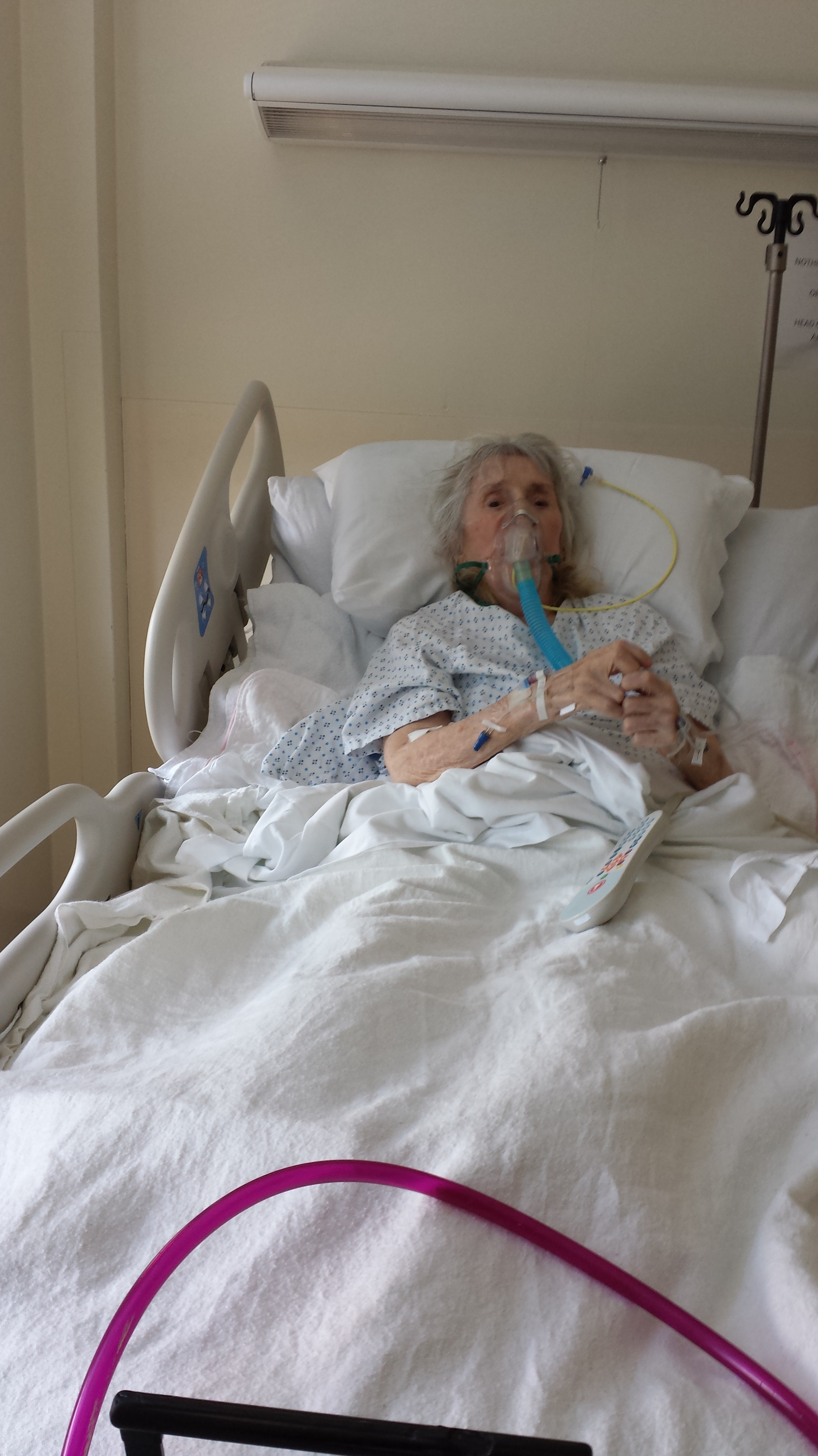
I was just finishing a long day, having brought my client, age 72 to ECT, stopping at the drugstore and then going out to dinner with her. Everything was going great. The doctors had just reduced her shock treatments from twice a week to once a week and she was getting used to her new memory assisted living residence.
Just the week before, I had taken her to visit with another client, who was in a nursing home. It was disturbing to see someone who was physically fit, but who didn’t remember that her children were grown adults, compared to someone else who was in a wheel chair but had no signs of dementia. The person in the nursing home, age 68 was in a wheelchair since an accident injured her spine about 10 years ago. She was a former art teacher and continued to follow the museums and the opera. Because she required transfer by Hoyer lift, she had spent down her savings to pay for in-home aides. Now she was waiting almost a year to go back home, while the paperwork went through the Medicaid process.
Then, just as I was ready to get in the car, I received a call from a hospital saying that this other client, the one from the nursing home was being admitted to the CCU and could I come right away. This was about 9PM and I hate to drive in the dark, but I was the Health Care Agent and they needed someone to contact about her medical history. I had never been in this hospital, a little community medical center that was close to the nursing home. Glen Cove Hospital was easy to get to, and the emergency room entrance was right by the free parking. I ran in only to see my client being hooked up to all manor of tubes and machines.
I’m writing about this because most of the articles I see about caregiving refer to people in their 90’s, when you can understand that they will be near the end of life. Even in my past experience, most of the people for whom I am called in to produce a DNR or Do not Resuscitate Order are unconscious and therefore I am called upon to use the Health Care Proxy.
But, in this case, the patient was alert, albeit very frightened. The doctors did all they could for the next few days but finally told me that a decision would have to be made. Either the patient would require a tracheostomy and would remain on a ventilator. This would mean that she would not be able to go home, instead she would remain in the nursing home for the rest of her life. She would also require a feeding tube and would no longer be able to speak. Even though the ethics committee doctor tried to talk about the possibility that some people can get off the ventilator, the pulmonologist was kind enough to explain that this usually only happens to younger, healthier people. The reality was, that nothing else could be done to save this patient’s life, other than to give her the kind of life most people dread.
This wasn’t the first time that I was there when a patient had to decide if death was preferable to living without any enjoyment. But, this was the youngest person, someone who only a week before was planning on going home, someone who didn’t suffer from any other life threatening disease. No cancer, no heart problems. She had not written out an advanced directive to talk about her desire for or against being on a respirator, because she didn’t suffer from any illness. The doctors couldn’t explain why her body was just shutting down. A sweet nurse came in and gave the patient a sedative. She said I could leave and come back the next day, when the patient was less anxious.
I was given a traffic ticket the following morning, for running a red light on my way to the hospital. Once before during this hospitalization, the patient had been able to be weaned from the ventilator, and I hoped that I would find her sitting up, a miracle. But, no. The patient was still hooked up to all manor of tubes, although now her eyes were fully alert. She asked for a pad and pen. With the nurse, the doctors and myself at her bedside, the patient wrote out her directions. “If nothing else can be done to cure me and let me go home as I was, then I do not want to have the procedure.”
Over the next week, I came to think of this person as the bravest person I knew. She talked to me about her life and the things she cared about. She did not have any children, which was how I became her health agent and POA. She asked me to go to her apartment and get her will. When I returned with the will, she went over each line to explain to me why she had made each provision. We laughed about cheating death, since the tubes had been removed and so far, she was still alive. She told me that she was satisfied with her life. Then came the morning when the nurses called me at 6 am to say that the patient had passed peacefully during the night. I went to her room to say my final goodbye and found her watching TV and looking just as I had left her, only no longer breathing.
NYS Health Benefit Exchange Update
PUBLIC HEALTH AND HEALTH PLANNING COUNCIL
SPECIAL MEETING OF THE COMMITTEE ON HEALTH PLANNING
June 26, 2013 11:00 a.m.
90 Church Street, NYC 4th Floor, Room 4A & 4B
Learn and Comment on the NYS Health Insurance Exchange
Donna Frescatore, Executive Director of the New York Health Benefit Exchange
with a panel discussion
Paul Eisenstat, Excellus BlueCross BlueShield
Paul Macielak, NY Health Plan Association
Pat Wang, Healthfirst
PUBLIC COMMENT ENCOURAGED! SPEAK NOW OR DON’T COMPLAIN LATER!
Patients know when they need their Parkinson’s meds.
Here is an article that appeared in the NY Times regarding the dangers for patients with Parkinson’s who do not get their medications on time, or who get other medications that worsen the Parkinson’s and cause delirium. http://newoldage.blogs.nytimes.com/2013/04/17/hospital-dangers-for-patients-with-parkinsons/ .
The article points out that people with Parkinson’s are hospitalized much more frequently than others their age, and their stays last longer. A common reason: “These patients aren’t getting their meds on time, and they’re not getting the right meds.” Some need to take their dopamine-replacing drugs as often as every two hours, a schedule at odds with standard hospital regimens.
Besides going to the hospital, any change in the routine of a person with Parkinson’s can cause delirium and psychotic episodes.
My client, who I will call Caroline, was living in her own apartment with 24/7 aides. She attended an adult day care program several times a week. Caroline was very attuned to when she needed her medications. Even when she went out of the house, she carried a few pills in an envelope that was marked with the name of the medications, the dosage and the time to take them. Even without being prompted, she was aware when the Parkinson’s medication was due, because she would feel pain or trembling in her legs.
Caroline had been experiencing some unusual anxiety at night. We called the Neurologist for help. He recommended increasing the Seroquel, an anti-psychotic medication. It helped some, but Caroline was still resisting help from her aides, so the family decided she might do better in an assisted living facility.
The Assisted Living Facility offered medication management, as well as companions to take the resident to and from meals. They assured us that they were very familiar with Parkinson’s Disease and could handle her medications. Almost immediately after admission, Caroline was diagnosed with a Urinary Tract Infection. Here is a blog post that describes what a UTI can do to a person with Parkinson’s much better than I can. “I have learned that UTI’s are very common in advanced Parkinson’s patients. Because all the muscles of the body are implicated in this nasty disease, it is very difficult for sufferers to completely empty their bladders, always leaving behind some urine. This creates a perfect breeding ground for bacteria.” Here’s the link to the blog. http://day2dayparkinsons.blogspot.com/2010/09/saturday-night-fever.html
Once Caroline’s UTI was cleared, everything seemed to go back to normal and she was getting used to her new home. However, when I called to see how she was, she kept complaining that she wasn’t getting her meds on time. I spent a few days with her and it did seem that the meds were not being given on a regular basis and I asked about it at the nurses station. It seems that the house psychiatrist had changed the times of some of the meds because Caroline was complaining about being tired. They had changed the time of her Parkinson’s medication to fit their schedule, waking her at 5 Am to allow for the five doses a day she needed. We had given her from Stalevo every four hours from 8 AM to 10 PM. In addition, they changed the Seroquel dose from bedtime to lunch hour.
A few weeks later, I was told that Caroline was wandering around the building and not able to function at an independent level. When I arrived at the facility, she couldn’t even put on her clothes. She was so distracted, that she wasn’t aware of where she was. On the advice of a colleague at Zucker Hillside Hospital, I immediately took her the emergency room.
The Zucker Hillside Hospital is North Shore-LIJ’s nationally recognized behavioral health center known for its pioneering clinical, teaching and research programs. The Geriatric Psychiatry Inpatient Service is staffed by a multidisciplinary behavioral health team with special gerontological expertise. Patient populations include elders with late-life depression, psychotic disorders, Alzheimer’s disease or a related dementing condition with concomitant serious behavioral disturbances such as agitation, aggression, paranoia, and mood abnormalities, and medical/neurological illnesses with psychiatric symptom expression. The team at Zucker Hillside determined that Caroline was having an extreme reaction to the medications. Several weeks later, they are still working to normalize her. The psychiatrist explained that most assisted living memory programs are not appropriate for patients with Parkinson’s induced psychosis. More on where people with dementia’s that are not Alzheimer’s related can best be cared for coming in our next post. In the meantime, here is a free kit that can help you prepare for a visit to the hospital or even just to keep around the house so that others can see what they must know to help the person with Parkinson’s.
The Aware in Care kit can be requested at www.awareincare.org or by calling 1-800-4PD-INFO (473-4636).

This is why the National Parkinson Foundation (NPF) has launched the Aware in Care program, which aims to help people with Parkinson’s disease get the best care possible during a hospital stay.
To protect, prepare and empower people with Parkinson’s before, during and after a hospital visit, NPF has developed a free Aware in Care kit with tools and information to share with hospital staff during a planned or emergency hospital stay.

The kit includes:
Hospital Action Plan Read about how to prepare for your next hospital visit—whether it is planned or an emergency.
Parkinson’s Disease ID Bracelet Wear your bracelet at all times in case you are in an emergency situation and cannot communicate.
Medical Alert Card Fill in your card with emergency contact information and place in your wallet.
Medication Form Complete this form and keep copies in your kit for use at the hospital.
Parkinson’s Disease Fact Sheet Share the facts about Parkinson’s with hospital staff and ask that a copy be placed in your chart.
I Have Parkinson’s Reminder Slips Share vital information about Parkinson’s disease with every member of your care team in the hospital.
Thank You Card Present this card to a staff member who provides high quality care.
Magnet Use this magnet to display a copy of your Medication Form in your hospital.
AGINGICON.COM

Have you lived a life of accomplishment, doing what fulfills
you? Have you reached an age where things are harder to do?
Are you a leader and you know that you cannot do it alone?
Then, you are an Aging Icon.
My name is Caryn Isaacs.
Having been at the helm of developing hundreds of healthcare
businesses and running several multi-million-dollar companies,
my journey includes pioneering a physician-owned HMO and
active engagement in Healthcare Reform.
As a Patient Advocate, my company, GetHealthHelp, LLC,
specializes in crafting solutions that enable Aging Icons to
continue pursuing their passions.
An example is a 98-year-old author, playwriter and poet who is
suffering from fibromyalgia and thought that all her work
would be forgotten. I found a way for her legacy to continue by
publishing them as books and now working on having them
made into films.
If this sounds like something of interest, let’s meet to talk
further.
-
Archives
- October 2026 (1)
- September 2026 (1)
- August 2026 (1)
- July 2026 (2)
- June 2026 (2)
- May 2026 (2)
- April 2026 (2)
- March 2026 (2)
- February 2026 (2)
- January 2026 (2)
- December 2025 (2)
- November 2025 (1)
-
Categories
-
RSS
Entries RSS
Comments RSS


You must be logged in to post a comment.