My New Year’s Resolutions 2013
2013 will bring many changes to GetHealthHelp. As we stand on the fiscal cliff and cower under the debt ceiling, it is hard to be flippant about what the New Year holds. The usual New Year’s resolutions, like eating healthier or to start an exercise program, don’t seem to take on any urgency when we see our nation’s leaders and our role models kicking the can down the road. Being the eternal optimist, here are a few resolutions that I plan to keep and some that I will probably need some help with. My best wishes to all for a healthy and happy New Year.
 1- Make the GetHealthHelp website even more informative.
2- Make the GetHealthHelp website easier to navigate.
3- Make the GetHealthHelp website more interactive.
4- Make the GetHealthHelp website more fun.
May you find everything you envision.
Choices for when you out live your assets.

DON’T WORRY
Many adult children who are paying for in-home caregivers are facing the reality that their parents will outlive their savings. By the time they are calling me, it usually goes something like this, “My Dad is running out of money, I need to place him in an assisted living facility,” or “My Mom has spent everything, now she needs to get on Medicaid.” The children have decided on the ‘Tactics’ without considering what the ‘Strategy’ is for reaching their parent’s life expectations or taken into account the ‘Goals’ and associated realities of their parent’s situation.
Miriam-Webster defines strategy as a careful plan or method for achieving a particular goal, usually over a long period of time.
Sari Klinghoffer, Director of Sales, WPI Communications Inc. wrote “A strategy looks at the big picture and uses various tactics in its execution.” The big picture is to gain their customers trust. In the past she used direct mail. Presently they have added blogging and social media. So, while the ‘Tactics’ may have changed with the times, the ‘Strategy’ and ‘Goals’ have remained the same.
This may be said of our Elders also because the things that really mattered to them continue to do so, but the tactics must change in response to the new financial situation.

BE HAPPY
Instead of using business terms like strategy and tactics, we use words like ‘Life Expectations & Planning’. Life Expectations is often thought of in terms of years. But, instead we should think of what we ‘expect’ from life. An example of a lifetime expectation strategy would be to find contentment or peace, or you may want to find excitement and fun. We call it ‘Giving a Voice to Your Health Concerns.”
My client Virginia, who has stage 4 Alzheimer’s Disease told me that she likes to have change in her life. She was outspending her income and had drawn down all of her assets. The family thought she was ready for a nursing home. Her strategy is to keep life interesting. The tactic we employed to reach her strategy was moving to a different assisted living facility, one that had more activities for Alzheimer’s patients and where the costs were within her income level.
Sandra, a client, saved her money from years of teaching to purchase her dream apartment, even though the monthly bills were eating into her investment accounts. She never expected to find herself confined to a wheelchair. Always fiercely independent, Sandra hired private aides to tend to her needs. After depleting her savings, she told me that she’d rather live in her apartment without food than move to a nursing home. With the help of her accountant and attorney, we are getting Medicaid coverage and enrolling in a Long Term Managed Care Plan. Her strategy is to stay at home, her tactics are to apply for Medicaid Long Term Care coverage.
You can apply this concept to any situation. First determine your strategy, your mission, your goal. Then find the resources to provide you with the tactics to execute your strategy. A Patient Advocate can help you to think things through to identify your strategy and to prioritize which tactics will work best for you.
Call us for a free phone consultation, Caryn Isaacs, Paient Advocate GetHealthHelp.com 347-965-9222. E-mail patientadvocate@gethealthhelp.com
Resource:
Sari Klinghoffer, Director of Sales
WPI Communications, Inc.
Your Source for Newsletter Marketing
55 Morris Avenue
Springfield, New Jersey 07081
Tel: 973-467-8700 | 800-323-4995 Ext. 1028
Direct: 973-544-0410
Fax: 973-467-0368 | 800-677-9742
E-mail: slklinghoffer@wpicommunications.com
Web: http://www.wpicommunications.com/
Emergency home health crunch due to Sandy
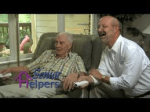 Sandy strikes another blow on seniors and caregivers. Many home health aides lost their homes and cars in Sandy. Some families, who are juggling work and caring for their parents just can’t get to the store and run over to their parents home, while negotiating with plumbers and electricians at their own storm ravaged place. The effects of Sandy just keeping coming, like the wave that rammed through the area over a month ago.
Last week, I went to meet a couple who required 24/7 care. Dad has Alzheimer’s and is in a wheelchair. Mom had two car accidents in as many days over the past weekend. First, she had a run in with a tractor-trailer who was in town for Sandy and wasn’t familiar with the roads. Then, she rammed into a cement divider because the street lights were out and she couldn’t see. To top it off, one of the usual aides for the couple couldn’t make it in to work because of damage to his home and car. Senior Helpers Caring in Home Companions came to the rescue. Laura Giunta, Director of Business Development said, “Senior Helpers provides companion care in homes and facilities throughout Long Island. Services include Cooking, Housekeeping, safety monitoring, errands, plant and pet care, transportation, socialization and integration. As a certified Senior Advisor, I assist families in getting to the next step regarding the care and safety of their loved ones.” The agency arranged for one of the aides to drive Mom to the police station to get the report, then to take her to the Jewish Center where she teaches Hebrew. Both the day and evening home care workers were well acquainted with the family dynamics between the couple and their adult children, who were also busy rebuilding their Sandy affected homes. Kam, the aide who took on the extra shifts also lost his car in the storm. He was forced to travel two hours each way by bus to be there in time to coordinate getting Dad in and out of bed, which takes two people. He said the agency supports him in making sure he has the resources to know what to do in any emergency.
Laura and I share another client in Nassau County. This couple, Dad with Dementia and Mom suffering with chronic back pain and a history of falling, decided to go to Florida instead of sitting around their gutted neighborhood. Also, their usual companion had been told by her doctor to stop work because she was pregnant and shouldn’t be in such a stressful environment. Mom had fallen in her home earlier in the week, so she reluctantly agreed to have a replacement aide come in for a few hours each day. The day before they were to get on the plane, the couple decided to go to the store for a few things. About 5 PM I had a call from their daughter. Mom twisted her arm while opening the ice cream freezer and fell on her head. She was bleeding all over the place..and luckily conscious….and Dad was in the car! A customer, who was also a nurse, called their daughter and she called me. I told her to call Melanie from Senior Helpers. The agency had a companion drive over to the market to pick up Dad, take him home for dinner and get him settled. He was pretty upset and disoriented until she offered him ice cream. The police drove the car home. Mom was in the hospital for 7 hours. They scanned her head, neck, arm and then finally super glued her head gash. Senior Helpers had a special aide pick her up, get her into bed and stay over night. The aide also went to the store to get those needed items the next day and got the couple on their way. They landed in one piece in Florida and are thankful that Senior Helpers was there for them.
Many of my clients are facing similar issues when their aides cannot make it to work or are resigning their posts. Going through the hiring process to replace a long time private aide can be traumatic for the patient as well as the family. This is one of the reasons I prefer to use a reliable agency who can make sure there is always someone available. You can reach Laura at
Email: lgiunta@seniorhelpers.com
Web: http://www.seniorhelpers.com
Phone: 631-383-4341 516-750-0035
Oldsters show us how to deal with Sandy
Weeks after Sandy ran a river through living rooms and took our cars with it, we are still hearing stories of people living without electricity, heat, hot water or word about when things will be back to normal. Yet, my clients have been through worse. Even as they are the ones who really need help, they offer encouragement and a positive attitude to the younger folks who are frozen in fear that they can’t get gas for their cars.
Just before the storm, I met with Anne and her husband Harold who live in Brighton Beach. Harold requires help to get from his bed to his wheelchair. Anne is a cancer survivor, but still supervises Harold’s home health aides, wound care and medications. They get picked up by Access-a-Ride everyday so that Harold can receive Hyperbaric Oxygen Therapy. After the storm, their apartment had no power, no heat and no hot water. The blocks surrounding their home were all evacuated, but their elevator wasn’t working, so there was no way for then to reach the Access-a-Ride. For the first few days, the Visiting Nurses couldn’t get to their neighborhood because the trains weren’t working. The local stores were all closed including the Duane Reade which had a sign on it telling people to go to their other store, many miles away. Then the National Guard came door to door and when they saw Harold, they sent for the EMT and took him to the hospital, but not the local one in Coney Island because that is evacuated also. Now Anne is traveling by taxi to visit him, but needs to get home each day for their cat. There is light, but no heat or hot water. Even with all this, she tells me first about the wonderful lunch her sons took her to in Manhattan yesterday. She also hopes to go to the Met for a show that a friend recommended, as long as Harold is safe in the hospital.
Sandra was getting rehab at the Glengariff Health Center. She was anxious to get home to her apartment in Battery Park City. Then came Sandy. A few days later, when their phones came back on, Sandra told me that she was happy to be there, safe, warm and fed. The only thing she needed was dental floss. She told me not to worry, that she could wait until I could get there next.
My friend and mentor Martha and her husband Matthew, both in their 80’s live in Freeport. Last year, Irene flooded their basement, while they were out in Mattituck at their summer place. They came back to a black mold and had to have the whole level demolished, including irreplaceable designer details and a lifetime of photos and everything else one saves for the memories. Now, Sandy came along and took the furnace, the water heater, the washer and dryer, along with the boxes of dry cleaned clothes that had been returned by their insurance company after Irene. Their son just moved to Florida from Long Beach. He considers himself lucky even though the antiques he left at the house in Freeport are a complete loss.
I had an appointment to take a client for a tour of the beautiful New Nautilus Hotel in Long Beach on the Wednesday after the storm. Needless to say, we couldn’t get there. We don’t even know when they can open, as the reports for Long Beach and the Rockaways are not good. Here is an excerpt from a Daily News article, which was the only way I knew what was happening to another client, who has been living in the Long Island Living Center.
Morris Sorid, aged 102 and a Holocaust and cancer survivor, also made it through Hurricane Sandy in one piece. He was living in an assisted living facility in Atlantic Beach, just over the Atlantic Beach Bridge from Far Rockaway, Queens, and was evacuated as part of a “mass emergency exodus” as the storm approached. He is currently residing in the basement library of the New Hempstead retirement home in Kew Gardens, Queens.
He says, “I was nearly destroyed six or seven times in my life. To tell you the truth the hurricane doesn’t excite me too much.”
He has the utmost confidence in his caretaker, too – Archie Catacutan, a 26-year-old nurse. Of him, Sorid says, “I depend on him, so I have nothing to be afraid of.”
During the storm it was stressful, but Sorid was more concerned about his fellow roomies and even offered up his bed by the wall to a man who looked like he was going to fall off his bed.
Sorid survived the Nazi invasion of Pruzany, Poland (this is now Belarus) with his wife by hiding in a bunker for 18 days after hearing about the trains heading to the death camps. After they left the bunker, they lived in the forest, eventually escaping and emigrating to Brooklyn in 1948. They had left their daughter with grandparents, but learned later that she, along with the rest of their family, perished in Auschwitz. Sorid and his wife went on to have two sons, and he published his memoir, “One More Miracle,” at age 95.
“Sandy has been horrific, impacting so many, and taking so much. Sandy has caused loss of life, loss of necessities and loss of possessions. Sandy has taken so much, and for those of us not directly impacted, we thank God, maybe say a prayer and think of how we can help. For those directly affected, those who need to rebuild, we need them to know that their community is with them, that they are not alone, that there is a shoulder to cry on. That while possessions may be gone memories are not, while necessities have been taken, it is ok and honorable to accept help, accept a smile, accept a listening ear. It is ok feel beat up but not beaten, to feel weary but not defeated, to feel sad, as you hold your loved ones close and begin to reevaluate what you appreciate. While Sandy, this horrific event took so much, it did not take away those characteristics that make us who we are and makes you, you, allowing you to be who you are. Try to take steps every day, even little steps that can help you rebuild, feel empowered and know we all know how horrific Sandy’s aftermath is. “said Lori Metz, LCSW, CCM, when I asked her for a few words of encouragement. Learn more about Lori at http://therapists.psychologytoday.com/rms/prof_detail.php?profid=71121&sid=1262182052.4014_32358&state=New+York&lastname=Metz
Another Terry Schiavo case.
When signing your health care advanced directives, make sure you discuss your preferences with the person you name your health care proxy. I have a questionnaire for the person you are thinking of naming as your health proxy. It can help you both to decide if they will be prepared and likely to honor your wishes. Many times, when the questions are posed, both people realize that they have conflicting views, and it may be better to choose someone other than your closest relative. A recent example is a woman who had a debilitating condition that was likely to become life threatening in the near future. She did not want to have unusual measures employed if only to keep her alive when there was no hope of her living her life outside of a nursing home bed. When we used the questionnaire, it became clear that her brother, whom she had named as the health proxy, did not believe in removing life support under any circumstances. Once this was brought to light, the woman asked her niece, who is an attorney if she would be able to do it, and she agreed. Imagine having to fight your own family when you are so sick.
In the case of SungEun Grace Lee, I think the courts considered that the young woman was still able to make her own decisions and so the health proxy was over-ridden by her own wishes.
Mixed Message From Obama Advisers on Medicare: E-mails show outside advisers were previously open to private plans.
by Meghan McCarthy
Updated: September 11, 2012 | 7:31 p.m.
September 10, 2012 | 11:11 a.m. Reprint from the National Journal
http://www.nationaljournal.com/healthcare/mixed-obama-message-on-medicare–20120910?print=true
President Obama has seized on Republican proposals to overhaul Medicare as a top campaign issue, saying that the GOP plan to add a private insurance option would end seniors’ guarantee of government health care. But behind the election-season politics, influential experts who have advised Obama on health care are open to a future for Medicare that includes competition among private insurance plans.
The drumbeat against privatizing Medicare was loud and clear at last week’s Democratic National Convention and over the weekend as Obama campaigned in Florida and made Medicare .a top issue. Obama has warned that the plan from GOP nominees Mitt Romney and Paul Ryan would cost seniors $6,400 more a year for their health care.
It may not be what voters hear on the campaign trail from Obama and his surrogates, but converting Medicare from a government program that covers all of seniors’ health needs into subsidies that seniors use to buy private health insurance is the future—not the apocalyptic event Democrats would have voters believe.
One private e-mail exchange illuminates this point well. In e-mail exchanges with the staff of the White House-appointed fiscal commission that were obtained by National Journal, David Cutler and Jonathan Gruber, who have both advised Obama, gave qualified support to a Medicare voucher plan offered by Ryan and former Clinton budget director Alice Rivlin in talks to reduce the deficit.
Cutler and Gruber are both hot shots of the health economics world. Cutler is a professor at Harvard, Gruber at MIT. Both advised Obama on health care in the 2008 campaign, and both had major roles in helping develop Democrats’ 2010 health care law. When they offer counsel, the White House is listening.
Staff from the National Commission on Fiscal Responsibility and Reform — which was led by former White House chief of staff Erskine Bowles and former Sen. Alan Simpson — asked Cutler and Gruber in November 2010 for their thoughts on the Ryan-Rivlin plan, which did not keep traditional Medicare as an option for seniors. Both experts offered suggestions to make it more palatable to commission Democrats. Neither balked at the plan, which is arguably more conservative than the Medicare plan offered by GOP presidential nominee Mitt Romney.
“How about this … removing the special status of [traditional] Medicare,” Cutler wrote. He then suggested giving an executive board created by the Democrats’ health care law the option of “moving the Medicare population into the exchanges.”
“That would be the same as the voucher,” Cutler concluded.
In other words, Cutler wasn’t just recommending that the Democrats incorporate vouchers into Medicare, something the Obama campaign is squarely against now. He was also proposing that the federal government move seniors into insurance exchanges through a much-criticized executive-branch Medicare board. That is a proposition you won’t hear in talking points from either Cutler or the Obama campaign.
Cutler now says he was only proposing an idea for Medicare if insurance exchanges are “shown to work well for the non-elderly population,” by getting people into good plans and lowering costs.
“If you show me evidence that something works, I am in favor of doing more of it,” Cutler said in an e-mail to National Journal. But that caveat was not included in his 2010 e-mails with fiscal-commission staff.
Gruber also said he approved of the Ryan-Rivlin plan in 2010 e-mails to fiscal-commission staff, as long as the insurance market reforms of the Democrats’ health care law are kept in place.
“So overall I like this proposal for Medicare – SO LONG as it is built on top of health reform,” Gruber wrote in 2010. “Without broader health reform, I don’t think it works.”
Gruber now says that economists don’t know enough yet to move the majority of Medicare enrollees into private-insurance plans. As part of the effort to expand coverage to the uninsured, President Obama’s health care law would establish insurance exchanges for people younger than 65 to buy private health care. Gruber said that this is a better way of testing out new approaches, adding that it would be “stupid” to experiment first on the older and sicker Medicare population.
“We are getting better, but we are not quite there yet,” Gruber said in an interview. “But premium support is ultimately where we need to be.”
The complicated politics of Medicare and private competition are also at play in some of the Obama administration’s own policies. As National Journal reported on Saturday, Obama’s Health and Human Services Department is giving states leeway and funds for pilot programs that would move some of the poorest and most vulnerable Medicare patients into managed-care programs.
Regarding the broader future of Medicare, Gruber agreed that any plan shifting the majority of the program’s beneficiaries out of the government-run Medicare program and onto private plans would “end Medicare as we know it,” a phrase Obama and his surrogates have often repeated on the trail.
“It does. I don’t think it’s a lie,” Gruber said. “In theory, [premium support] is not wrong. In practice it’s not ready yet.”
There are three key problems that still must be worked out, Gruber said. First, policymakers have to figure out how to keep insurance companies from cherry-picking healthy people and essentially forcing the sickest patients on to traditional Medicare, which would drain the program of money. Second, policymakers must find a way to make sure insurance companies design benefits so they are easy-to-understand for beneficiaries, and don’t trick seniors into buying more expensive plans that aren’t suitable for them. Third, they have to figure out just how quickly government checks for seniors to buy coverage could grow.
Still, Gruber said he could see Medicare becoming a premium-support-style plan within a five-year timetable, after the Affordable Care Act’s health insurance exchanges start enrolling an estimated 30 million people into insurance plans in 2014.
“In the first few years of the insurance exchanges we will learn a lot,” Gruber said.
Of course, anything five years away would require action in the upcoming presidential term, whether it belongs to Obama or Romney. It is unclear if Obama would be willing to approach any premium-support-style plan for Medicare — even if it meets the caveats his external advisers have now laid out. The Obama campaign did not return repeated requests for comment.
The Cutler and Gruber e-mails must be considered in the context of the challenge of securing support for long-term deficit-reduction measures. In any serious effort to rein in deficits, health care costs, mainly through Medicare, are the albatross that neither party can get off its neck. The Democrats’ health care law contains dozens of pilot programs and billions of dollars to test new ways to reduce health care costs by restructuring how hospitals and doctors are paid. But it isn’t enough to change the deficit outlook now. So it makes sense to test every theory you can.
Meanwhile, Cutler continues to warn that the Romney-Ryan Medicare plan would be catastrophic for seniors.
“Mitt Romney — like his counterparts on the campaign trail and Paul Ryan — would end Medicare as we know it, turning it into a voucher program,” Cutler wrote in March memo for the Obama campaign.
“Some Republican plans, including Romney’s, offer traditional Medicare as an option for seniors. But whether the plans force new retirees out of traditional Medicare immediately or steadily raise its cost over time, the result in the same.”
That public statement does not jibe with Cutler’s 2010 private e-mail, which proposed having the executive-branch Medicare board simply move seniors into exchanges to buy their own coverage, where traditional Medicare would not be an option. Cutler says he criticized the Romney-Ryan plan because the way they are designed will “bleed out traditional Medicare.”
“Nowhere in the campaign memo do I say that private plans are a bad idea for Medicare,” Cutler said in an e-mail to National Journal. “Indeed, my recent JAMA paper explicitly says that such plans could be more efficient than traditional Medicare — though the case is not completely clear.”
But Cutler’s JAMA article ultimately concludes that premium support plans “may offer” a solution for Medicare, if the Democrats’ health care law fails to slow health care costs.
He attributes the differences in his 2010 e-mail and what he says now for the campaign and in public articles to “trying to explain health care economics to people who are not economists or health care specialists.”
“I agree, people should read my articles and books. But if they don’t, I need to communicate in pieces,” Cutler wrote.
Vistaprint is Great!
I reodered my vistaprint rack cards which have increased my business by leaps and bounds. For some reason the back came out crazy. I called them and they gave me a full credit and are sending the corrected cards ASAP. Thank you VistaPrint for making me look great.

Source: vistaprint.com via Caryn on Pinterest
What are your options when you run out of money?
 “My mom is running out of money in the assisted living, hospital or rehab, so she will have to go on Medicaid and live in a nursing home.” I have heard these words so many times, I can’t count them.
On most of these occasions, my role is to help the family make the decision to accept hospice for their loved one because they have waited so long, hoping the patient was going to get well and go home. But recently, I found a large gap between what the system has to offer in between independent living and the nursing home. A lot has to do with licensing and advertising.
In this case, the client was suffering from moderate dementia, she used a walker but had no other medical complications. Her heart was healthy and she didn’t have diabetes or COPD. She was living in a private residence for seniors, but not a licensed assisted living according to state law and therefore not covered by Medicaid. However, everyone assumed that because the residence offered room and board and everyone there used either a walker or a wheelchair, that this was an Assisted Living Facility. In fact, they were advertised on many web sites under the heading Assisted Living Facility. I don’t think this was the fault of the residence. There is simply no distinction on these websites between those that qualify for Medicaid and those that are private. It is up to the family to shop around.
The cost of the stay at most private residences is about $5000 a month, including assistance from a licensed home care agency that provided help with bathing, dressing and medication. Sometimes the bill can be as much as $7000 including Cable TV and other utility bills and personal services such as hair cuts and toe nail clipping. If the patient does not have diabetes, toe nail clipping is not covered under Medicare.
I was called in to help with the Medicaid application, pending the move from the independent residence to the nursing home. The financial paperwork had been with the nursing home for months. Since the nursing home accepted that I would be able to help the patient qualify for Medicaid, we were asked to speak to the admissions nurse to get a move in date. That’s when we found out that the patient did not medically qualify for admission to the nursing home, as she was able to perform most physical activities of daily living with a minimum of supervision. Even though she was not mentally able to live on her own, dementia is not considered a reason to confine a patient to a nursing home level of care. We realized that it would even be cruel to condemn the woman to a life of laying in bed or sitting in a wheelchair, just because her memory wasn’t what it used to be.
Now, here is where the gap in the system showed itself. No one could point me to where the client could find the level of care she needed that would be covered by Medicaid. The nursing home staff suggested someone might be able to take her into their home. Since the woman did not have any family, I was pointed to unlicensed homeowners who will take a persons social security check in exchange for room and board. I couldn’t accept that in all good conscience, so I pulled out my trusty SUN-B Directory. There I found Fred Altman, who I remembered is like a real estate agent for senior residences. He said there was only one place in about a 50 mile radius that would be appropriate.
As it turns out, the facility is licensed as an Adult Home and so can accept Medicaid, when the resident is in need of a higher level of assistance with activities of daily living, but not ready for a nursing home. The kicker here is that since the facility is set up to treat people requiring this higher level of care, many services that this client needs are included in the basic rent. Medication Management, assistance with bathing and dressing, making sure the resident gets to meals and activities are all covered. For this client, it meant that she would not even need to qualify for Medicaid as she had sufficient income to pay for her monthly expenses.
This was a very good ending to a story that could have gone another way. The person could have been made homeless without the intervention of the people at the original Senior Residence, who called the alarm early enough for something to be done. The woman could have been pushed into an inappropriate setting if the Nursing Home hadn’t been ethical about her qualifications. Or the Adult Home could have been full, as I am sure they will be soon, as more and more people live longer, but just need a little help.
by Caryn Isaacs, Patient Advocate http://gethealthhelp.com
Resources: Senior Umbrella Network of Brooklyn http://sunb.org ;
Fred Altman, http://www.ElderCareAdviceInc.com;
I usually don’t copy, but this is a must read article!
Where ‘Socialized Medicine’ Has a U.S. Foothold
By UWE E. REINHARDT
Doug Mills/The New York Times The Olympics’ opening ceremony included a tribute to Britain’s National Health Service, which American critics often depict as a failure of “socialized medicine.”
Uwe E. Reinhardt is an economics professor at Princeton. He has some financial interests in the health care field.
Last Friday’s exuberant celebration of Britain’s National Health Service during the opening ceremony for the 2012 Olympics, directed by the Oscar-winning filmmaker Danny Boyle, got me thinking about American attitudes about socialized medicine.
Today’s Economist
Perspectives from expert contributors.
As might be expected, the event elicited a few tut-tuts from Conservative members of Parliament, and more stern rebukes from the commentariat in the United States, most vehemently by Rush Limbaugh.
Bashing the N.H.S. has become a favorite ritual during any debate on health care reform on this side of the Atlantic. As the disgraceful treatment of Dr. Donald Berwick, former administrator of the Centers for Medicare and Medicare Services, illustrates, any American remarking positively on the N.H.S. runs the risk of being declared unfit to serve in government and vehemently attacked in the blogosphere.
The most humorous illustration of American N.H.S.-bashing was supplied during the heated health reform discussions in 2009 by Investor’s Business Daily. In an editorial, the paper asserted, “People such as scientist Stephen Hawking wouldn’t have a chance in the U.K., where the National Health Service would say the quality of life of this brilliant man, because of his physical handicaps, is essentially worthless.”
Dr. Hawking, who has lived and worked in Britain all of his life, responded: “I wouldn’t be here today if it were not for the N.H.S. I have received a large amount of high-quality treatment without which I would not have survived.”
Eventually, Prof. Ara Darzi, a former minister of health, head of surgery at Imperial College in London and Britain’s ambassador for health and life sciences, and Tom Kibasi of McKinsey & Company, an honorary lecturer at Imperial College, gently lectured American readers on this amusing episode and on the actual modus operandi of the N.H.S. The episode also opened a lively and sometimes bemused blog traffic in Britain.
Although I personally have never advocated adopting an N.H.S.-style approach to health reform in the United States, I have been puzzled for decades by the almost instinctive habit among many Americans of incessantly running down every other country’s approach to health care and health insurance.
Is this habit born of the deep-seated insecurity that might naturally arise from the cognitive dissonance of boasting “ours is the best health system in the world,” all the while beholding daily the travails and hand-wringing over the sometimes glaring shortcomings of the American health care system?
I have found that one effective way I can stop N.H.S.-bashing dead in its track is to ask bashers this simple question: “Why don’t you like my son?” I posed that question to a congressman who had berated “socialized medicine” during a hearing on health insurance reform at which I testified.
In response to the stunned look this question invariably elicits, I go on: ”You see, our son is a retired captain of the U.S. Marine Corps. He is an American veteran. Remarkably, Americans of all political stripes have long reserved for our veterans the purest form of socialized medicine, the vast health system operated by the U.S. Department of Veterans Affairs (generally known as the V.A. health system). If socialized medicine is as bad as so many on this side of the Atlantic claim, why have both political parties ruling this land deemed socialized medicine the best health system for military veterans? Or do they just not care about them?”
I must note that there is a widespread confusion in this country over the terms “social health insurance” and “socialized medicine.”
Among policy wonks, “social health insurance” is understood to be health insurance to which the individual makes contributions on the basis of ability to pay, rather than on the basis of health status. Such a system can be coupled, and often is, with purely private health care delivery systems, including for-profit enterprises. Canada, Taiwan, Japan, South Korea, Germany, the Netherlands and Switzerland come to mind.
Socialized medicine refers to systems that couple social health insurance with government-owned and operated health care facilities, such as Britain’s N.H.S. or the Hong Kong Hospital Authority, a still-appreciated legacy of British colonialism. Socialized medicine also typified the health systems operated by the former socialist countries in the Soviet orbit. Evidently, the V.A. health system perfectly fits the definition of socialized medicine.
Occasionally one does come across an American politician who mutters something about privatizing the V.A. health system. I doubt this idea would have much political traction, either as part of a party’s platform or in the presidential candidates’ campaign repertoire.
In fact, I would dare presidential candidates professing a distaste for socialized medicine to call openly for abolition of the V.A. health system in favor of a purely privatized system – e.g., a defined contribution system such as that advocated for Medicare by Representative Paul D. Ryan, Republican of Wisconsin and chairman of the House Budget Committee.
So far I have not received a satisfactory answer from detractors of “socialized medicine” to my question of why we have the V.A. health system when socialized medicine putatively is so evil. Perhaps some commentators on this blog will enlighten me.
Before responding, however, readers might consider these readings, which can be found in an Internet search on “V.A. Health Care and Quality”: a book by Phillip Longman, “The Best Care Anywhere: Why V.A. Health Care Is Better Than Yours”; an article on V.A. health care in the American Medical Association’s amednews.com, and, finally, from the Rand Corporation’s nationally recognized team of experts on the quality of health care in the United States this eye-opening report.
What’s Wrong with the American Health System?
What’s wrong with the American Health System? Misinformation-Disinformation and Lies. The American People, including most of our lawmakers do not understand how the health system works.
There are two parts to the American health system ,the delivery of care and the financing of care. In other countries there is only one answer to “how do we deliver care and how do we finance it?” In the US there are many thousands of answers.
In the US, the delivery of care is regulated by the Department of Health and the Department of Education in each State. Health Care providers are licensed to provide a defined service under a set of rules which include obtaining a level of education and experience and maintaining the proper facility and equipment. It is this part of the system that we point to when we say the American Health System is the best in the world.
However, the Financing of Care is regulated in many different ways. The Federal Government funds and creates the rules for Medicare. Each State receives some funding from the Federal Government for Medicaid coverage of the poor, while the State and Local Governments create the rules under which they will pay for that care.
Most people in the US get their coverage through private insurers, either through their employer or through an individual policy. Insurers can define the delivery system they will pay for, as long as they abide by the rules of their State for licensing of health providers and minimum regulations for reserves, showing that they can pay for the services they offered in their policy.
The Affordable Care Act (ACA) seeks to refine the guidelines underwhich States receive Federal Funding for Medicare and Medicaid and to mandate minimum standards for private insurers. It also intends to raise revenue to fund the changes through a new tax.
There is no question that it is a complicated system for which those who are healthy and have coverage are perfectly satisfied. It only becomes a problem when you are sick and need to find funding for your care. The opposition’s suggestion as to an alternative to the ACA is to allow the purchase of insurance across State lines, which would nullify the protections established by the State who represents the needs of their constituents.
Their other suggestions is to reform the laws under which a patient could receive damages in the case of malpractice. Their claim is that providers could lower their costs, which may be true to some extent, but is defensive medicine the only driving factor in rising health care costs?
As a small business owner, I am disappointed that the reform path chosen by our Government did not provide for a Public Option or even better for the Single Payer system that works so well for other countries. I am angry about the new tax. I would agree to pay for getting a comprehensive coverage package and to pay for my share of protecting the poor, however I do not see the ACA accomplishing this.
I am happy that there is a discussion about what our health care system needs because I don’t see either side laying down their misinformatiom-disinformation and lies long enough to find a solution to our funding problems.
Written by Caryn Isaacs, Patient Advocate and Health Policy Expert. Reprinted from LinkedIn group; Adult Children Caring for Aging Parents, discussion started by Ray Ashton 2nd, Founder, STAR Preventive Wellness – CEO, AFFECTS LLC Houston, Texas Area
AGINGICON.COM

Have you lived a life of accomplishment, doing what fulfills
you? Have you reached an age where things are harder to do?
Are you a leader and you know that you cannot do it alone?
Then, you are an Aging Icon.
My name is Caryn Isaacs.
Having been at the helm of developing hundreds of healthcare
businesses and running several multi-million-dollar companies,
my journey includes pioneering a physician-owned HMO and
active engagement in Healthcare Reform.
As a Patient Advocate, my company, GetHealthHelp, LLC,
specializes in crafting solutions that enable Aging Icons to
continue pursuing their passions.
An example is a 98-year-old author, playwriter and poet who is
suffering from fibromyalgia and thought that all her work
would be forgotten. I found a way for her legacy to continue by
publishing them as books and now working on having them
made into films.
If this sounds like something of interest, let’s meet to talk
further.
-
Archives
- March 2026 (2)
- February 2026 (2)
- January 2026 (2)
- December 2025 (2)
- November 2025 (1)
- October 2025 (1)
- September 2025 (5)
- August 2025 (2)
- July 2025 (1)
- June 2025 (4)
- May 2025 (2)
- April 2025 (2)
-
Categories
-
RSS
Entries RSS
Comments RSS
 AGING ICON
You must be logged in to post a comment.