Gottfried still solid on Single-Payer
Let New York Health help pay the bills
By Richard N. Gottfried
Published 11:31 p.m., Sunday, April 1, 2012
.
You buy a health insurance policy that covers care by “in-network” doctors and other providers, but also promises that if you go to an “out of network” provider, it will pay based on “usual and customary charges.” Your family doctor refers you to an out-of-network specialist, and it turns out the insurance company offers to pay about half the bill you get.
A few years ago, then-Attorney General Andrew Cuomo and a group of physicians brought a massive lawsuit against the top insurance companies. The charge was that those insurers were promising to pay based on “usual and customary” rates for out-of-network services, but those rates were bogus — and outrageously low.
The insurance companies agreed to settle the case. They agreed that the attorney general would set up an independent nonprofit organization, called Fair Health, to publish legitimate data the insurance companies would use for determining “usual and customary” charges.
Now, insurers are getting around the settlement by no longer promising to pay based on usual and customary; they will pay whatever they choose to pay.
So I have introduced a bill in the Assembly, carried in the Senate by Senate Health Committee chairman Kemp Hannon. It says that your health insurer company must disclose how it calculates out-of-network payments, and state them as a percentage of the Fair Health usual-and-customary rate. And it says the state Department of Financial Services — the new name of what used to be the Insurance Department — may not approve an out-of-network insurance policy unless it actually provides “significant coverage” of the Fair Health usual-and-customary rate.
In other words, insurers have to be open with their customers, and they can’t claim a policy covers out-of-network services if it doesn’t really pay reasonable amounts for them.
A Times Union Commentary page article last week, by an executive of the for-profit insurance company Empire Blue Cross-Blue Shield, says that our bill would “mandate a minimum reimbursement [to out-of-network providers] based on the Fair Health database.”
The bill does not do that. It would require disclosure and stop insurance companies from selling products that don’t really provide what consumers expect.
The Fair Health court settlement was hailed as a landmark. But the health insurance companies quickly found a way around it. If our bill becomes law, they may find a way around that, too. The problem is, whatever reforms we enact, our health coverage still relies on insurance companies.
Instead, New York should establish a universal publicly funded single-payer system, funded by broad-based revenue based on ability to pay. I sponsor an Assembly bill, carried in the Senate by Tom Duane, to set up such a system, called “New York Health.”
You and your doctor would work on keeping you healthy, and New York Health would pay the bill.
Richard N. Gottfried of Manhattan is chairman of the state Assembly Committee on Health.
Ronald Fatoullah and Associates educates the elder care experts.

Ronald Fatoullah
Caryn attended the Ronald Fatoullah & Associates Update Luncheon last week along with hundreds of elder care experts. There was some good news and some warnings about transferring and protecting assets for long term care planning. The good news is that the Medicaid Epanded Estate Recovery Law was repealed. Assets such as the Life Estate deed, are once again safe if properly divested before applying for Medicaid. This repeal was hard fought for and our thanks to the efforts of the New York State Bar Association and the elder law community.
Other good news they brought was in the area of EPIC coverage. Although EPIC is still not what it was, and there will be a fee and a requirement to pay for Part D Coverage, the plan has been greatly improved from last years plan.
Some of the warnings we recieved included making sure you have a Living Will and meeting with your financial planner to discuss the type of Annuities you have, because you may not be protected from Medicaid recovery if you have a revocable annuity. Also, the method of calculating life estates has been raised and you should talk with your attorney to discuss your options.
Mandatory Long Term Managed Care
Reinforced in this years budget is the move to mandatory managed care with adding dual eligibles to be added into fully managed care plans in 2015. The Public Health and Health Planning Council (PHHPC) has a broad array of advisory and decision-making responsibilities with respect to New York State’s public health and health care delivery system. It is charged with adopting and amending the Sanitary Code and health care facility, home care agency, and hospice operating regulations. The PHHPC also makes decisions concerning the establishment and transfer of ownership of health care facilities, home care agencies and hospice programs. It makes recommendations to the Commissioner of Health concerning major construction projects, service changes, and equipment acquisitions in health care facilities and home care agencies. It also advises the Commissioner on issues related to the preservation and improvement of public health. The Council’s powers and duties are set forth in section 225 of the Public Health Law. Watch the entire day’s discussions http://www.totalwebcasting.com/view/?id=nysdoh#
Dr. Emanuel Sergi talks about bunions.
Dr. Sergi has an office in NYC and also on Staten Island.
New Medicare Prevention Benefits Ad Campaign
 The Affordable Care Act expanded the availability of many of the prevention benefits available to Medicare beneficiaries. A cable advertising campaign was just launched, including ads discussing the fact that many more prevention benefits are available through Medicare. Please share with your members and other partners so that they can see the benefit of taking advantage of these prevention benefits now. The ads are available through the YouTube link.
Here is the link to the Video. Downloading it and viewing shows the best resolution:
And this is the link for the digital banners:
http://cms.sawyermillerhost.com/CMS_Prevention_300x60.html
Here is the YouTube link:
STATE OF NEW YO…
STATE OF NEW YORK PUBLIC HEALTH AND HEALTH PLANNING COUNCIL
SCHEDULE
March 22, 2012 Century House
997 New Loudon Road (Route 9)
Main Ball Room
|
Latham
JOINT MEETING OF THE COMMITTEE ON PUBLIC HEALTH
AND COMMITTEE ON HEALTH PLANNING
The Public Health Committee is charged with addressing the statewide governmental public health infrastructure (including workforce, IT, laboratory and other organizational capacity consistent with the Essential Public Health Functions) and support actions to assure readiness for future public health agency accreditation and public health workforce certification. The Committee also promotes interagency collaborations across government to support a “Health in All Policies” approach by State leadership. The Health Planning Committee advises the Council on need-methodologies, health facility plans, and emerging health care issues. Monitors major health care initiatives and advises the Council on progress and/or problems. The Committee will also include functions from the SHPRC’s Committee on Major Medical Equipment and Appropriateness Review in the evaluation of high technology equipment, and specialized services such as organ transplants. The Committee will also take into consider rural health matters in collaboration with the Rural Health Council. The Committee will also handle matters formerly considered under the SHPRC’s Information Systems Review Committee whose general purpose was to advance a framework for CON to ensure interoperable health information technology as an underpinning to health care delivery. |
|
|
TIME
|
STAFF CONTACT
|
|
9:45 a.m.
|
Sylvia Pirani at (518) 473-4223 or Karen Madden at (518) 402-0935
|
How to plan for Long Term Care costs.
By the time most people call me in to Advocate for them, their financial situation is mostly fixed in place. They don’t expect to be able to earn anymore, so what they will have to live out their lives is their social security, possibly a pension, any savings and investments.
For the past few years, we’ve heard about the sandwich generation who will be responsible for more of the expenses of their parents, while also working, covering their own living expenses and saving for their own retirement. But with the current economic downturn, adult children may not have the extra income to help out their parents. In fact, most of what I see these days is parents helping out the children, by babysitting, buying the extra’s grandchildren need and many times even giving the children and their family a roof over their heads as more people lose their jobs.
It became clear to me this past year, that there was a great disparity to the quality of life for a senior with long-term care insurance and those without. People like my cousins, who believed they had enough predictable income coming in every month to pay for a second home, a few nice trips every year and plenty to be generous to the kids and grandchildren, found that a lot of their income is going to pay for out-of-pocket expenses for healthcare, since he developed Parkinson’s. They are very familiar with the costs that could be needed in the future, since they cared for his mother with the help of a live-in aide. But, they also realize that there really isn’t anyone to do for them what they did for her, because their children live in another state and just about make ends meet themselves.
Another friend of mine has lived the great retired life for many years. However, now in their 80’s her husband is in a progressive stage of Alzheimer’s. They have seen their investments go down in value in the last few years and they have tapped those investments to support their lifestyle. They do not have children who can help them, in fact they have a disabled adult child who will need to provided for. They started having an aide come in for eight hours a day during the week, which is covered by their long-term care policy. The husband has been hospitalized several times in the last few months due to infections he develops from not being able to properly catheterize. He needs a higher level of care now and they know it will not only be getting worse, but may be dangerous for both of them to live alone. They are afraid to use more of their insurance, since they have a cap and regardless of that, their daily coverage is not enough for both of them to live in an assisted living facility or nursing home.
I do a lot of public speaking and have shared the stage with many financial planners and long-term care insurance salespeople. I thought I understood how plans work, as I have helped dozens of people use their long-term care policies to get care. But now, I am running into situations where people may not have enough insurance or the right kind of policy for their needs. So, I asked expert in Long Term Care Insurance, Rona Loshak to explain how to decide how much and the type of insurance that someone my age should consider to protect me from the fates I see my clients experiencing.
Rona told me that because she and her partner Natalie Karp only deal in Long Term Care insurance, they spend all their time learning about what policies are out there and what they do. She said there are three things to look at when considering long-term care insurance, “Health, Budget and Flexibility. Karp Loshak is able to look at a variety of products that can be changed as your situation changes.”
Rona explained the different types of coverage including plans that cover informal caregivers like paying your children to care for you from a cash benefit. She also talked about plans that waive the waiting period for home care and the State’s Partnership plans. ”
Their website talks about the Partnership Plans. ” Partnership Plans are a combination of Long-Term Care Insurance and Medicaid. It is a viable option for some since it protects all of your assets in Total Asset Plan (NY only) or a portion of your assets up to the amount of premiums that have been paid in Dollar for Dollar plans. There are income restrictions that must be met in both cases once you apply for Medicaid Extended Coverage. We are certified to sell LTC Partnership plans in NY, NJ, CT and FL.”
“People start out with one kind of policy and then a spouse or a friend get sick. The surviving spouse may then realize that they should increase their coverage to a lifetime policy, or add a cash benefit. We like to review our clients situation on an annual basis, while they’re healthy, but many people say they just don’t want to deal with it now.” Rona said.
But, I’ve seen too many situations where people do not have any choice but to suffer isolation, lack of care and even premature death because they didn’t have the resources to pay for improving their living conditions. There are many complicated issues to consider when planning long-term care, not having enough money shouldn’t be one of them.
Caryn Isaacs, Patient Advocate
http://GetHealthHelp.com
347-965-9222
___________________________________________________________________________________________________________________
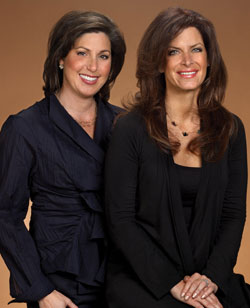 Natalie Karp and Rona Loshak , Specialists in all aspects of Long-Term Care Insurance plus Certified in Long-Term Care, CLTC*
As CLTC* licensed professionals with State Partnership certification, Karp Loshak are experts in asking the right questions in order to craft a plan to protect a family’s retirement portfolio from the risks associated with needing protracted care as one ages.
Karp Loshak understand and appreciate the emotional and financial consequences of protracted home or nursing care. They are independent insurance brokers and represent the top rated LTC insurance companies: Genworth, Guardian/Berkshire, John Hancock, Hartford Life, Lincoln, Mass Mutual, Med America, Mutual of Omaha, National Life, Prudential, TransAmerica, UNUM.
Karp Loshak is currently licensed in New York, New Jersey, Connecticut, Florida, California, Missouri, Washington DC, Massachusetts. They are members of The American Association of Long Term Care Insurers and are ranked one of the top in the industry. They work in partnership with lawyers, financial planners, CPA’s, Patient Advocates and other insurance professionals.
They are an approved NYS Sponsor of Continuing Professional Education Credits (CPE) for CPA’s and are Adjunct Professors for CW Post, LI University as a trusted source for information for long-term care insurance for individuals, business owners and employer groups.
KARP LOSHAK LTC INSURANCE SOLUTIONS 516.801.1419 INFO@KARPLOSHAK.COM http://karploshak.com
Licensed Home Care vs Companion Care
I worked with Kathy Livingston, Senior Vice President of Senior Helpers in January 2010, on the newsletters for Senior Umbrella Network of Brooklyn . We spoke several times that spring about how she came to be the co-owner of a Home Care Companion Agency after working in the corporate world, helping franchise owners with their own home care agencies. Kathy invited me to participate in a lecture series at the Brooklyn Public Library, where she talked home care and I talked Patient Advocacy. Then, it was as if Kathy dropped off the face of the earth. She was going through the NYS Department of Health’s process for operating a Licensed Home Care Services Agency (LHCSA). The process took almost two years of full time work.
Last week I sat down with Kathy to ask her how operating a LHCSA has changed the services Senior Helpers offers. “We realized as a Companion Service that many of our clients required a higher level of care than we were able to provide. As a LHCSA, we have two nurses on staff so that we can provide services to people who have more complicated medical needs such as wound care.” Kathy explained, “Legally, we can treat many more people.
I have referred clients to Companion Agencies because they told me they just needed a little help. Sometimes I find that their needs really include medical services, such as actual help in the toilet, not just supervision to get to the bathroom. “People call our Agency and the first thing they want to know is what it is going to cost. That’s the wrong way to decide which type of Agency is right for you.” Kathy tells prospective clients, “The best way for me to help you is for me to understand your needs. As a LHCSA, we have a nurse who determines the level of care required and a Social Worker who coordinates the services for each client and matches them with the appropriate attendant.”
“There are four areas we review before deciding on a care plan, health, social, family and financial.” Kathy told me that resistance is the number one problem she encounters when children think care is required but the parent is not ready to accept the help. “We need to get to speak with the client. Others may think they know the kind of care their parent needs, but we are the experts. We are there to tell the client what they need. A client may insist on an attendant who drives, but that should really be on the bottom of the list of qualifications. LHCSA’s have strict training and quality rules that the Department of Health looks at before approving our license. We also seek Accreditation from the Joint Commissions, which is a periodic external evaluation by recognized experts that provides impartial evidence of the quality of care delivered to clients.”
Kathy recommends the book, Treat Me, Not My Age: A Doctor’s Guide to Getting the Best Care as You or a Loved one Gets Older, by Mark Lachs,MD. “Our goal is to do the best job possible, and the LHCSA model allows us the opportunity to provide care for people over a long period of time, as they require more or less care.”
Kathy Livingston, Senior Vice President
Senior Helpers
353 West 48th St. New York, NY 10036
646-214-2086
klivingston@seniorhelpers.com
NYS Public Health & Health Planning Council
DOH Commissioner Shah addressed the council on February 2, 2012. He explained that the direction the Department is going is to provide more policy and less services. He said that the Governor’s budget highlights a transition to care management systems, a health insurance exchange which will provide a million people with health insurance, and the state takeover of local government administration, cutting 5500 County and City jobs, while adding 125 State jobs.
The Committee came out with an outline for the recommendations to the Governor for repurposing, streamlining, reforming and reconceptualizing the CON process with an eye on redesigning the public health system and the private health business.
There were about 5 dozen recommendations from statewide organizations, to the Health Planning Committee. To this, the committee has come up with 7 suggestions for review:
1- eliminate CON process for construction project
2- revise the process to facilitate the integration of physical and behavioral health services
3- consider co-location of D&TC’s with Nursing Facilities
4- streamline the process for amendments to CON’s
5- shift to self certification for architects/engineers
6- create a process to account for equipment which has become standard
7- create a timeline for reviews
Additional ideas proposed that require more discussion:
1- broaden the scope of CON to include physician practices that are built solely to avoid the regs
2- established providers should not have to file new 2A’s
3- the process needs to be more proactive, solicit applications, batch
4- strengthen local input/planning
5- It was brought up that there was a suggestion made from the oral health community that dental health should receive more attention and that was considered “not convincing.”
Dancing with the Stars
This is the second time Caryn will be participating in Dancing with the Stars at Ateret Avot, a senior hotel. Last time, Caryn was mentioned in the Ateret Avot newsletter and received flowers and a certificate.
AGINGICON.COM

Have you lived a life of accomplishment, doing what fulfills
you? Have you reached an age where things are harder to do?
Are you a leader and you know that you cannot do it alone?
Then, you are an Aging Icon.
My name is Caryn Isaacs.
Having been at the helm of developing hundreds of healthcare
businesses and running several multi-million-dollar companies,
my journey includes pioneering a physician-owned HMO and
active engagement in Healthcare Reform.
As a Patient Advocate, my company, GetHealthHelp, LLC,
specializes in crafting solutions that enable Aging Icons to
continue pursuing their passions.
An example is a 98-year-old author, playwriter and poet who is
suffering from fibromyalgia and thought that all her work
would be forgotten. I found a way for her legacy to continue by
publishing them as books and now working on having them
made into films.
If this sounds like something of interest, let’s meet to talk
further.
-
Archives
- March 2026 (2)
- February 2026 (2)
- January 2026 (2)
- December 2025 (2)
- November 2025 (1)
- October 2025 (1)
- September 2025 (5)
- August 2025 (2)
- July 2025 (1)
- June 2025 (4)
- May 2025 (2)
- April 2025 (2)
-
Categories
-
RSS
Entries RSS
Comments RSS
 AGING ICON
You must be logged in to post a comment.